Speculative Design / UX Futures
Designing for experiences that don't exist yet
An intensive exploration of how emerging technologies can reshape human behaviour, interaction and experience, and what designers should consider before those futures become ordinary.
The summer school.
An intensive summer programme exploring speculative design, emerging technologies and future user experience. The goal was not to ship a product, but to investigate how designers can think critically about futures that don't exist yet.
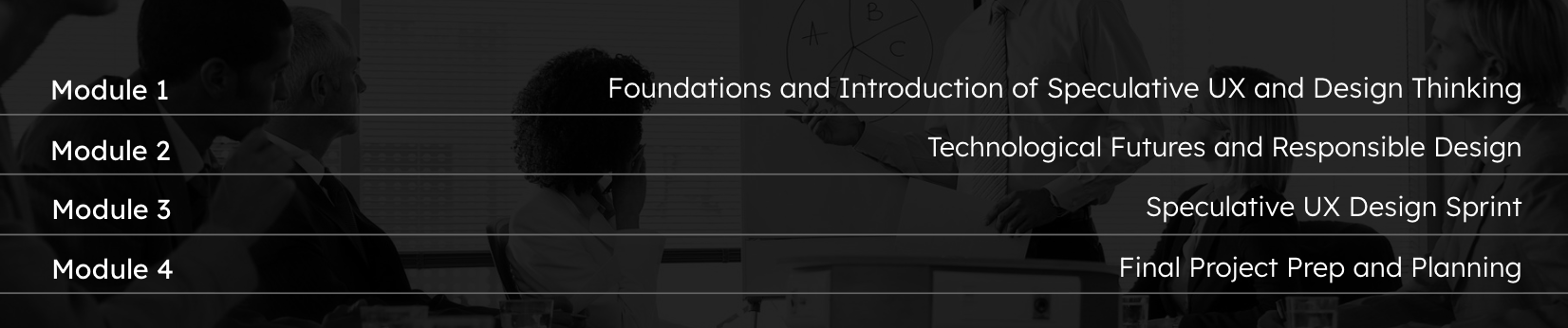
The programme was structured across four modules, each building on the last: from foundational thinking through technological futures, into a speculative design sprint, and finally toward final project preparation.
Programme structure
What it is
This is not a conventional case study. It is a speculative design exploration, an intellectual investigation into emerging technology and future experience.
Designing beyond the interface.
Most of my professional work has involved designing within existing products, platforms and constraints. I wanted to explore a different question: what happens when the technology, behaviour and interface itself are still evolving?
The programme became an opportunity to investigate speculative design, emerging technologies and extended realities at a deeper level, not simply as new interfaces, but as potential changes to how people experience the world.
This was a bridge from my current UX work into future-facing design. Not abandoning the practical, but expanding the lens.
The bridge
From designing within constraints to questioning the constraints themselves, and asking what kinds of experiences emerging technology could create.
A research landscape, not a deliverable.
The programme approached future experience design as more than a technology exercise. It examined the relationship between emerging technology, human behaviour, social context and the consequences of introducing new interaction paradigms.
The research landscape spanned three interconnected domains: the technology itself, how humans perceive and respond to it, and the societal structures that govern access, power and ethics.
Research landscape
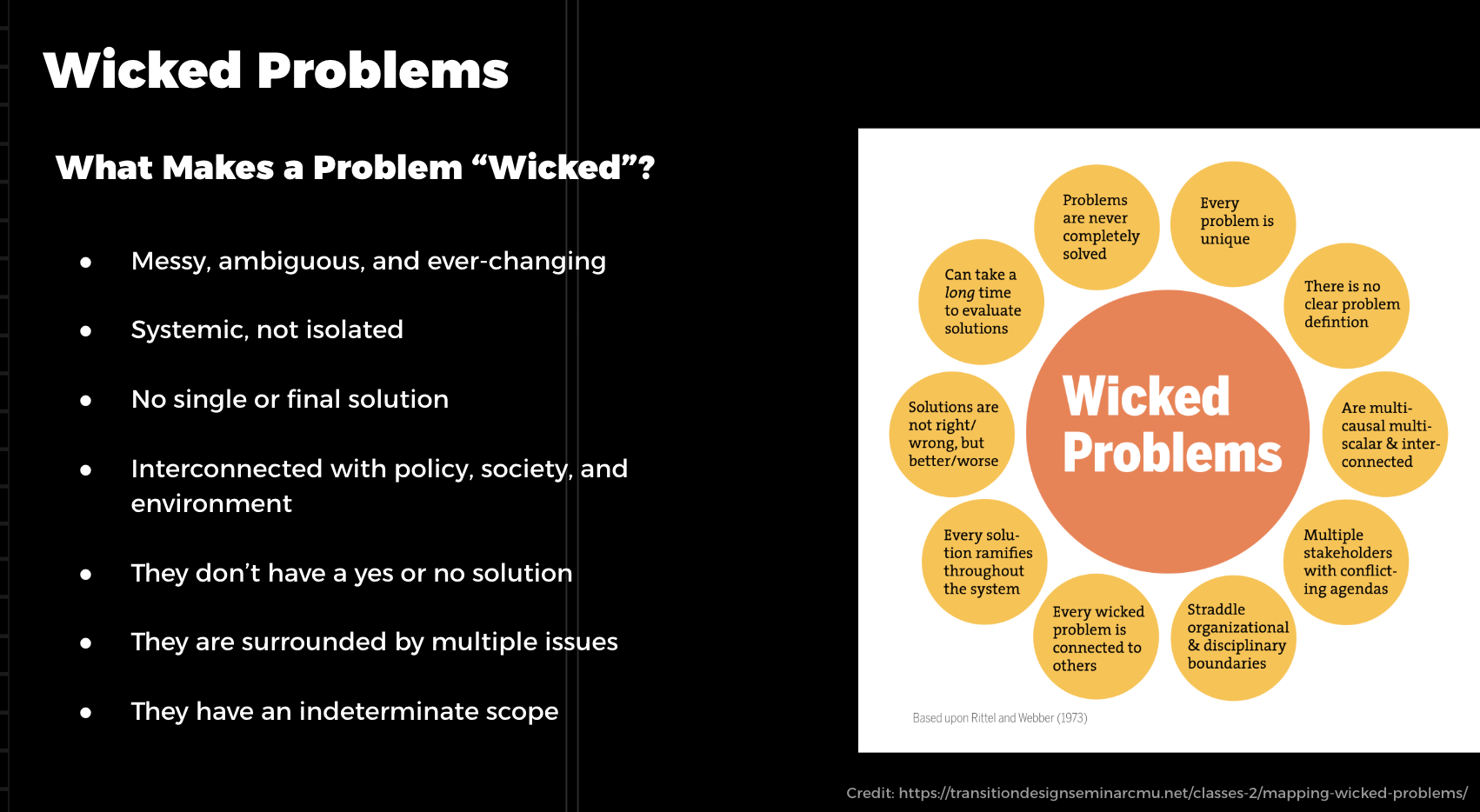
A core concept was the idea of wicked problems: messy, ambiguous, interconnected challenges with no single or final solution. These are the problems speculative design is best suited to explore, because they resist conventional problem-solving.
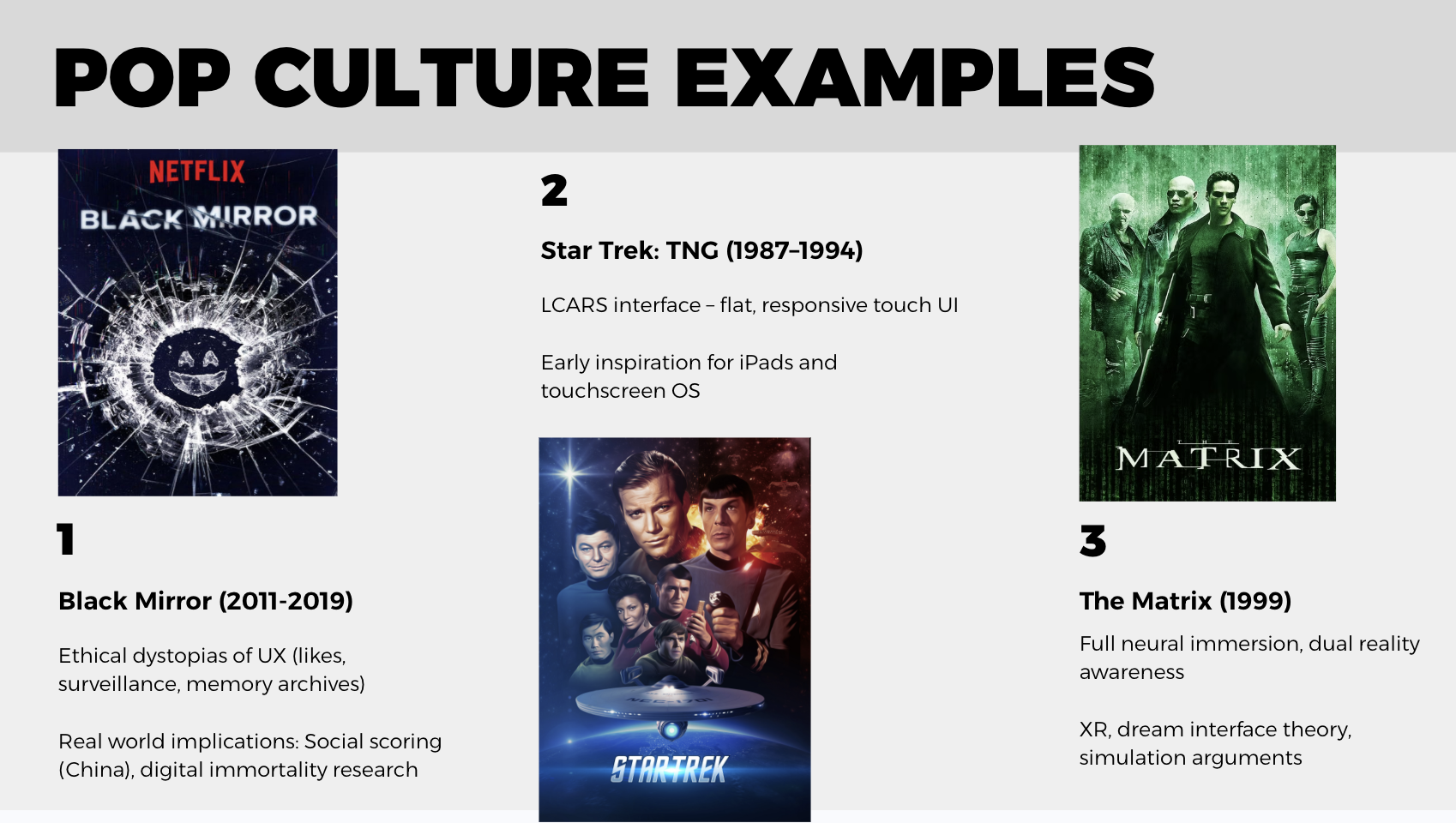
Pop culture already does the work of speculative design. Black Mirror, Star Trek, The Matrix, each presents a future interface and asks what happens when people use it. The programme made this explicit: fiction is a legitimate research method.
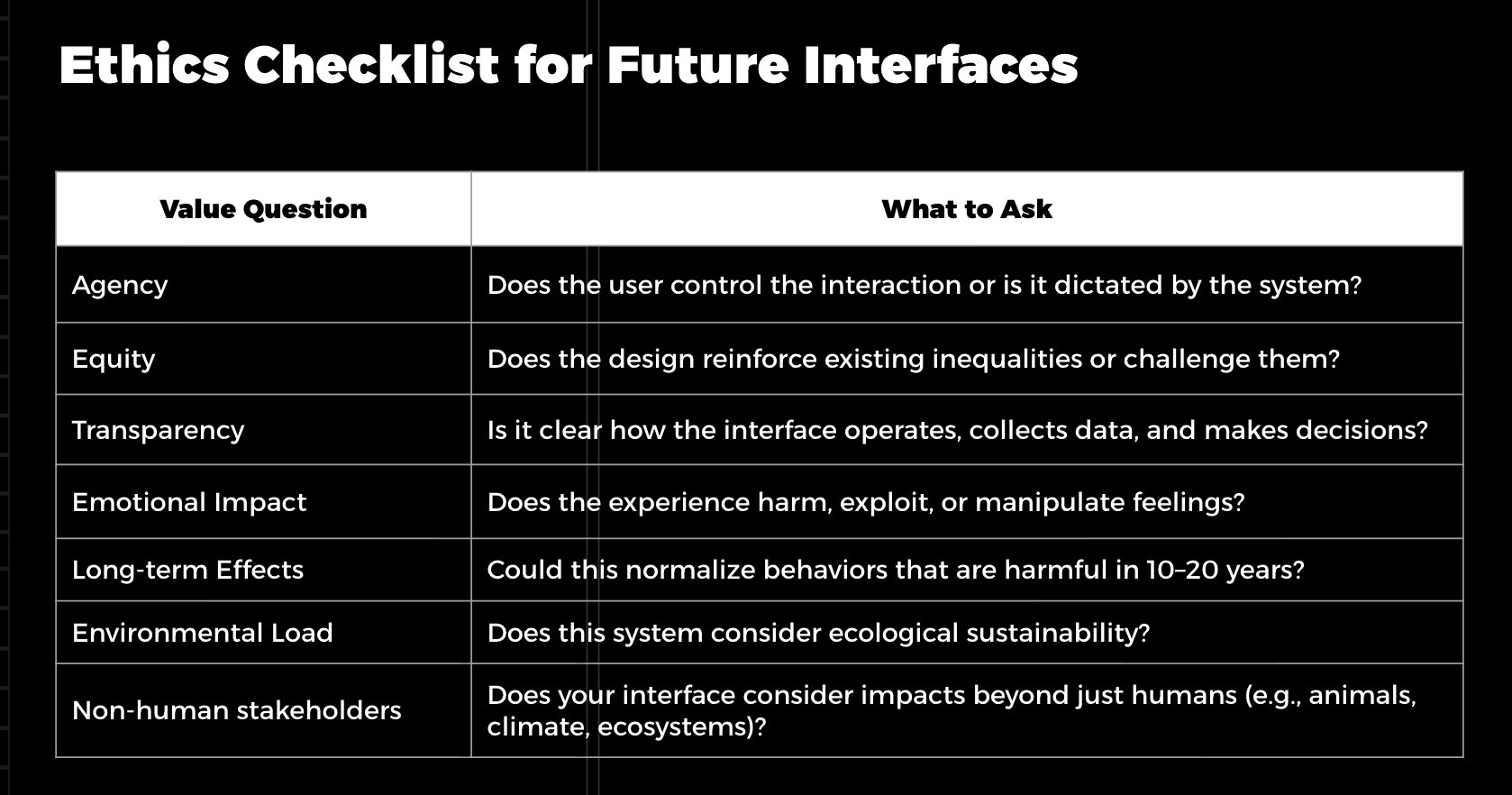
But the research wasn't just about looking outward. It also gave us a framework for looking inward, at the ethical dimensions of any future interface we might design.
Ethics checklist for future interfaces
The approach
The research was not about finding answers. It was about learning to ask better questions, and having a framework to evaluate the answers we imagined.
How my design lens changed.
The programme shifted how I think about the relationship between technology and design. It wasn't simply about learning new tools. It was about evolving the questions I ask before I start designing.
The evolution
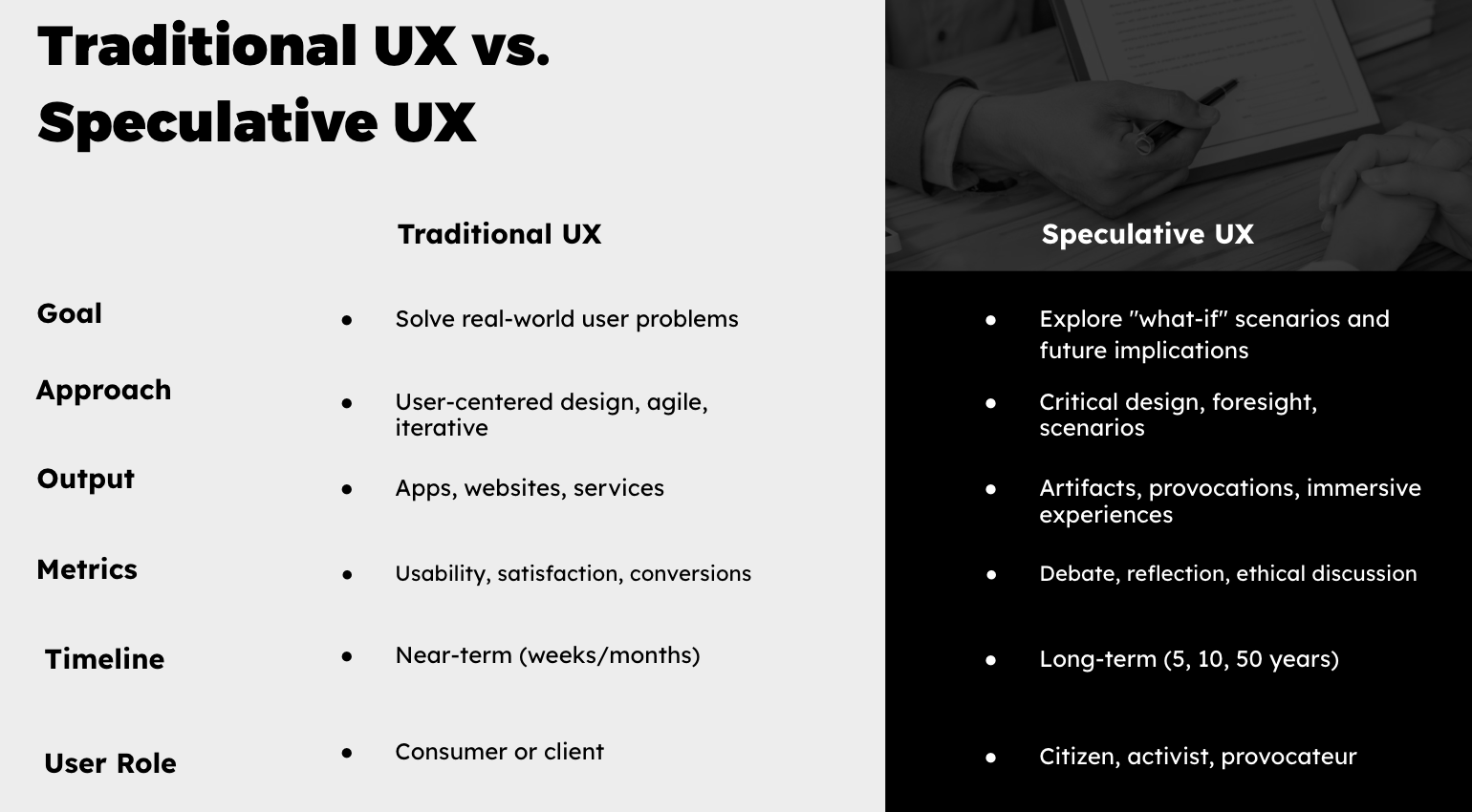
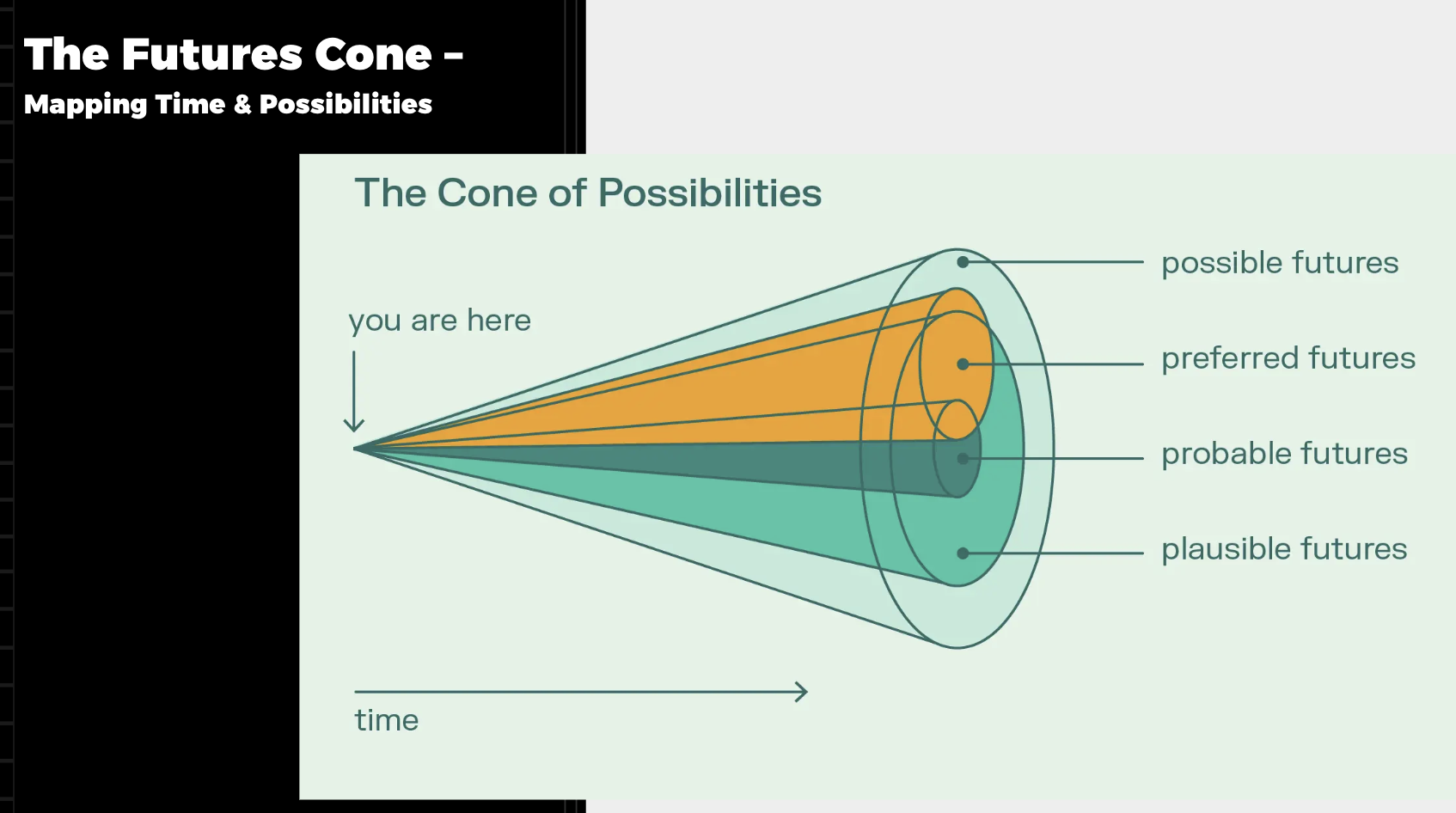
The Futures Cone taught me that design shapes which futures become real. But the programme also pushed back against the temptation to sort futures into clean categories of good and bad.
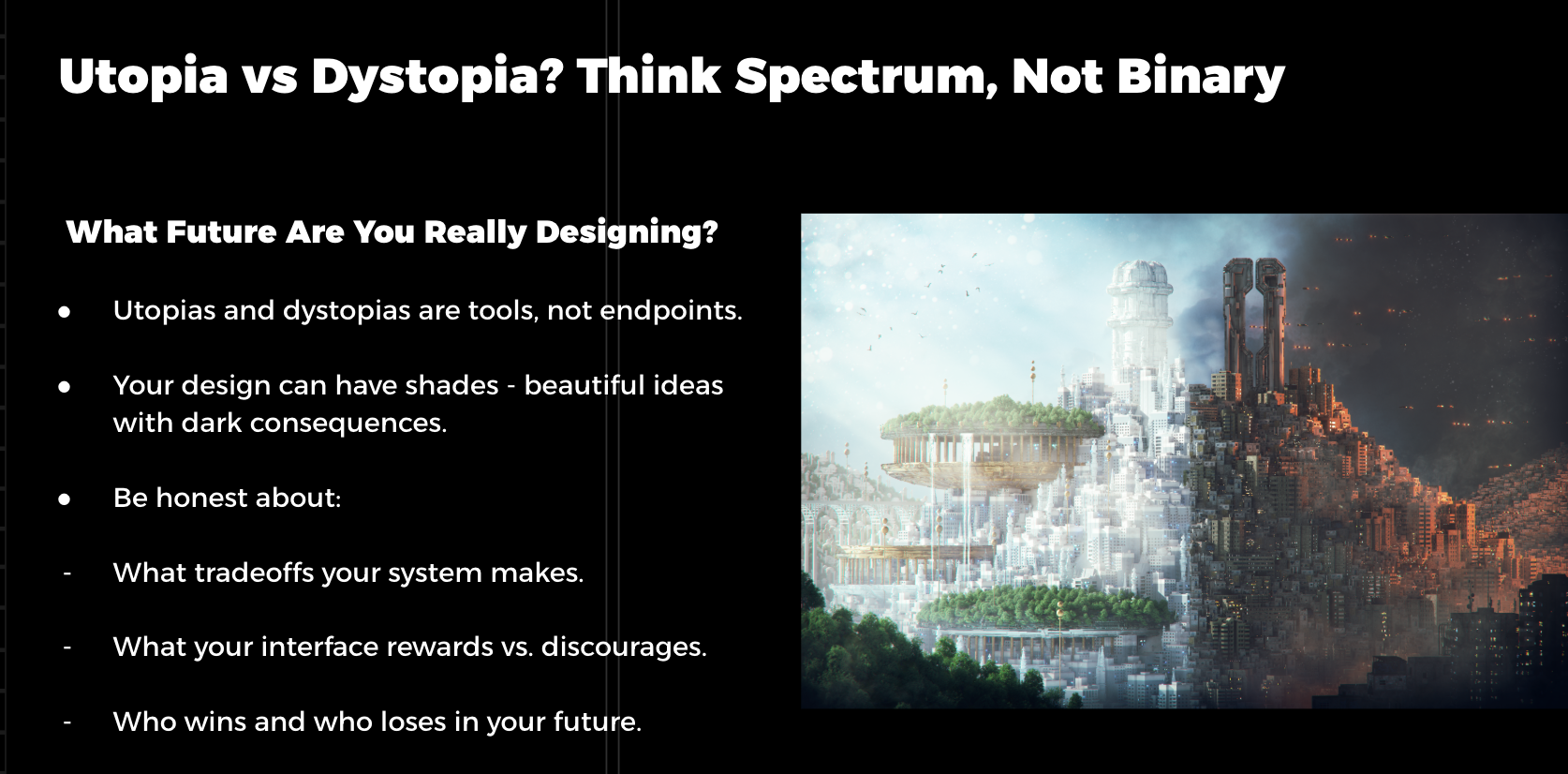
Utopias and dystopias are tools, not endpoints. A design can have shades: beautiful ideas with dark consequences, or frightening systems that surface important truths. The question isn't which future is better. It's what tradeoffs your system makes, what your interface rewards versus discourages, and who wins and who loses in the future you're designing for.
The shift
From 'what can this technology do?' to 'should we design this future at all?' And then further: 'who wins, who loses, and what tradeoffs am I making?'
When the interface leaves the screen.
Extended reality changes the relationship between interface, environment and user. Instead of interacting with a discrete screen, information can become spatial, contextual and embodied.
The fundamental unit of interaction shifts. Navigation becomes orientation. A page becomes a space. A session becomes continuous context. The design vocabulary changes entirely.
Design question
If the interface is everywhere, what does 'navigation' even mean?
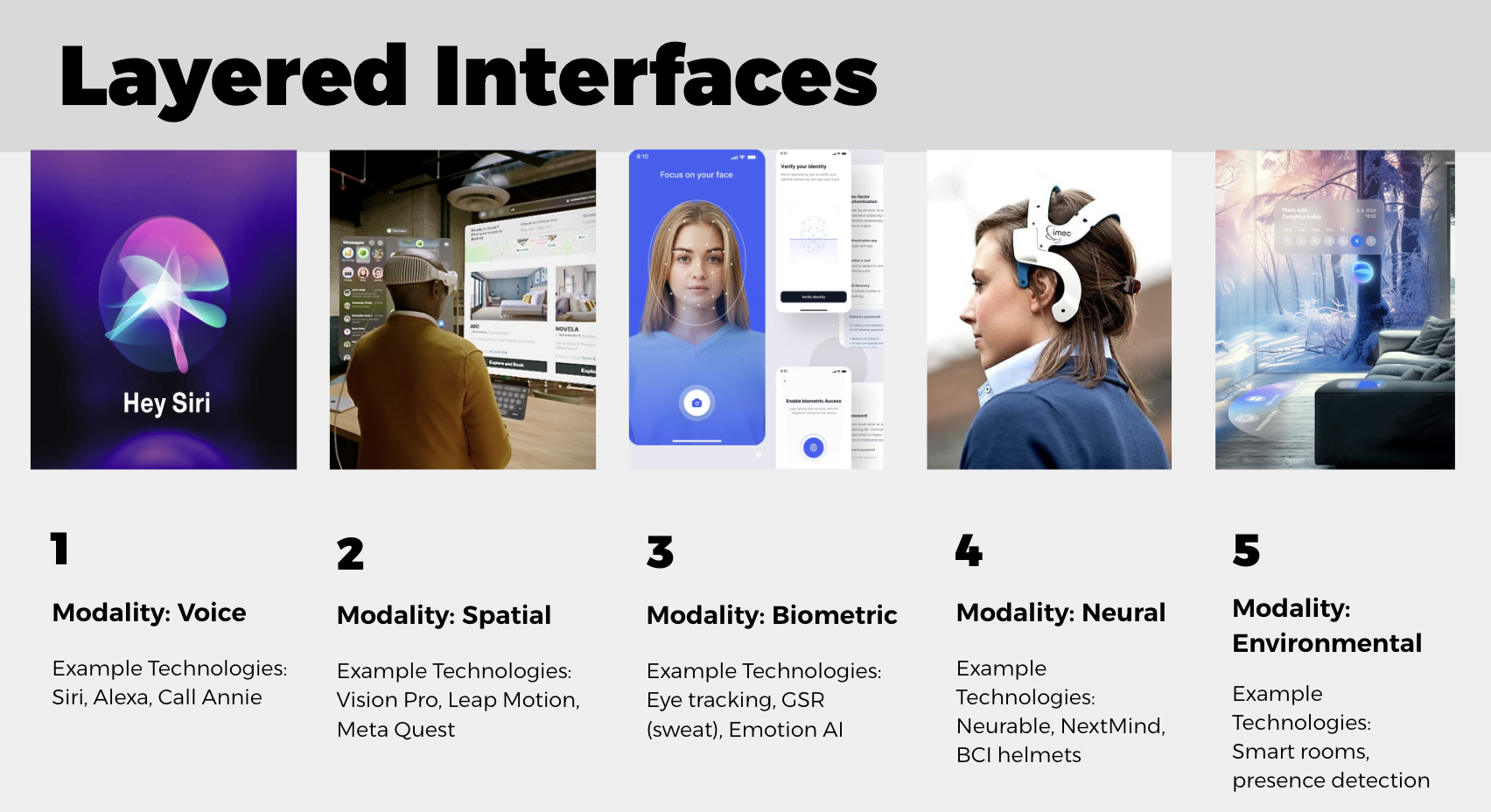
The programme explored five interaction modalities: voice, spatial, biometric, neural and environmental. Each represents a fundamentally different relationship between the user and the system, and each introduces its own design questions around agency, privacy and control.
But the most provocative question wasn't about where the interface lives. It was about what happens when the interface becomes a copy of you.
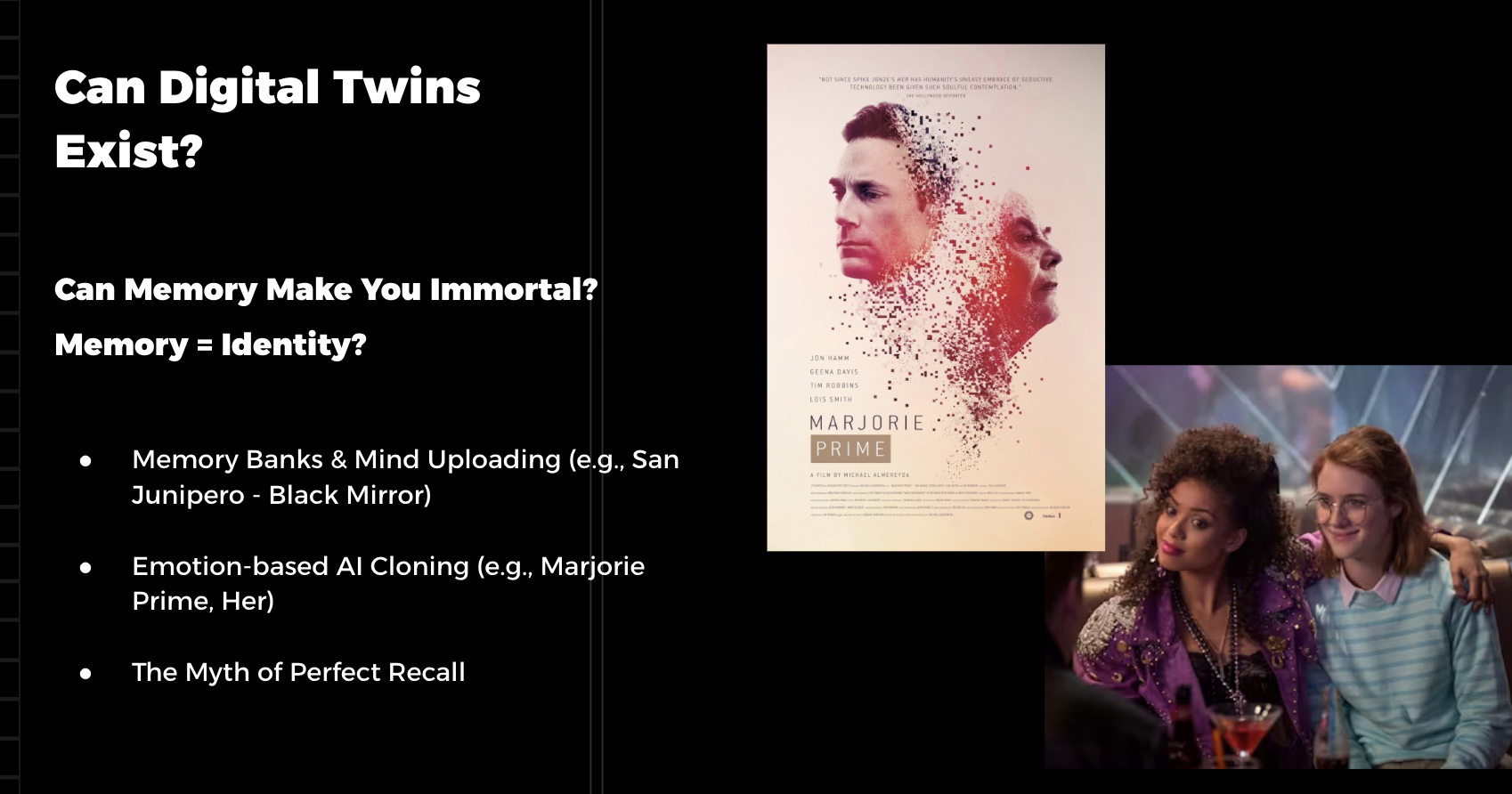
Digital twins, memory banks and emotion-based AI cloning push the boundary between user and interface to its breaking point. If your memories can be uploaded, if your personality can be cloned, if a digital version of you learns faster and feels deeper, then what exactly is the interface and what is the user?
The programme explored this through the lens of conflict, choice and agency. When a twin disagrees with its original, who gets control? Can you co-exist with your own copy? And what are the design implications: identity settings that let users choose how separate or merged they are, divergence logs that let twins grow apart, and the fundamental question of who owns the data, the twin or the origin?
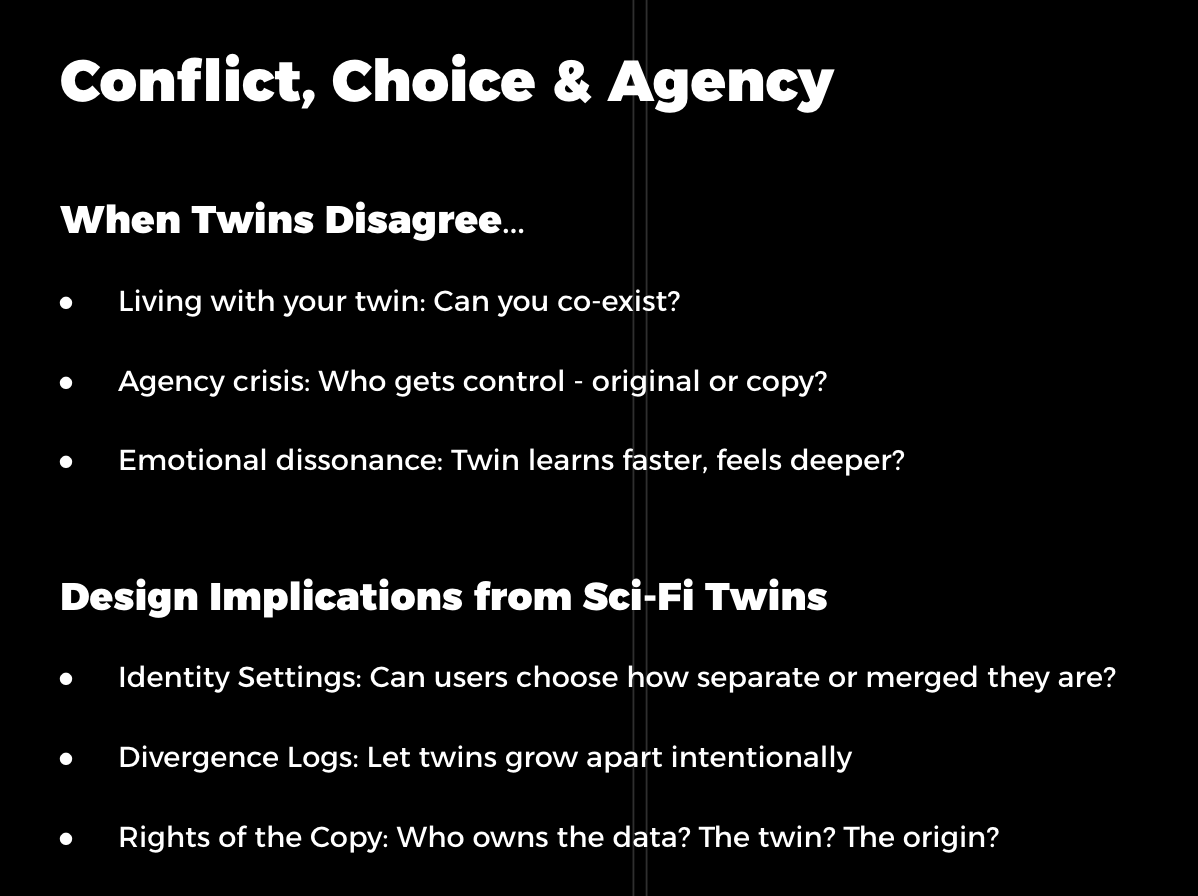
The boundary
XR changes where the interface lives. Digital twins change who the interface is. The design questions shift from usability to identity, agency and rights.
The project structure.
The programme moved from theory to practice through a series of design briefs, each building on the last. These were given as submissions to students to put everything together, from worldbuilding to the final museum exhibit.
The speculative scenario wasn't about predicting the future. It was about constructing a plausible future world, placing an interface inside it, and asking what happens when someone uses it. The structure followed a clear path from proposition through consequences.
The proposition flow
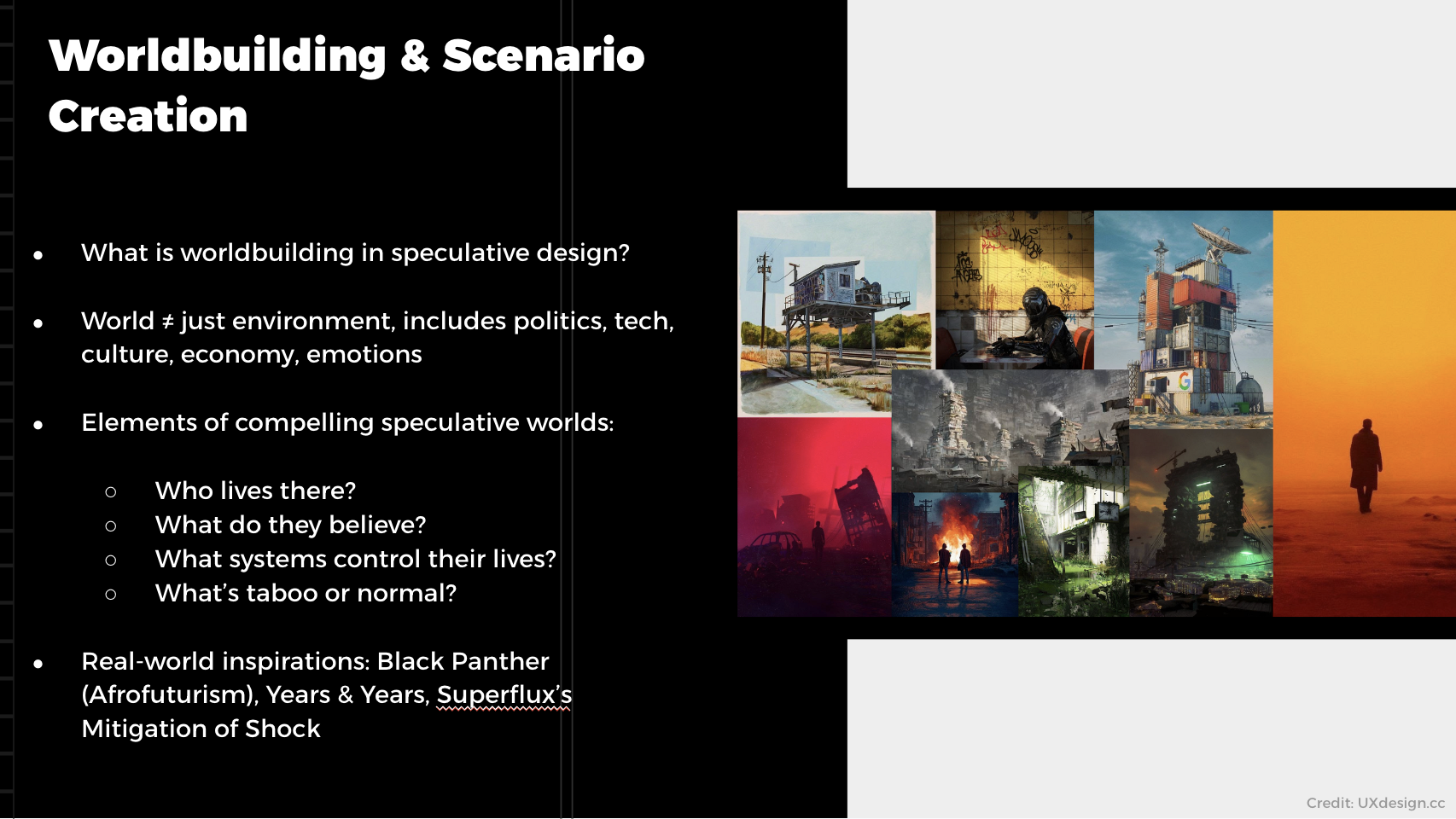
Worldbuilding in speculative design isn't just about environment. It includes politics, technology, culture, economy and emotions. A compelling speculative world answers: who lives there, what do they believe, what systems control their lives, and what is taboo or normal.
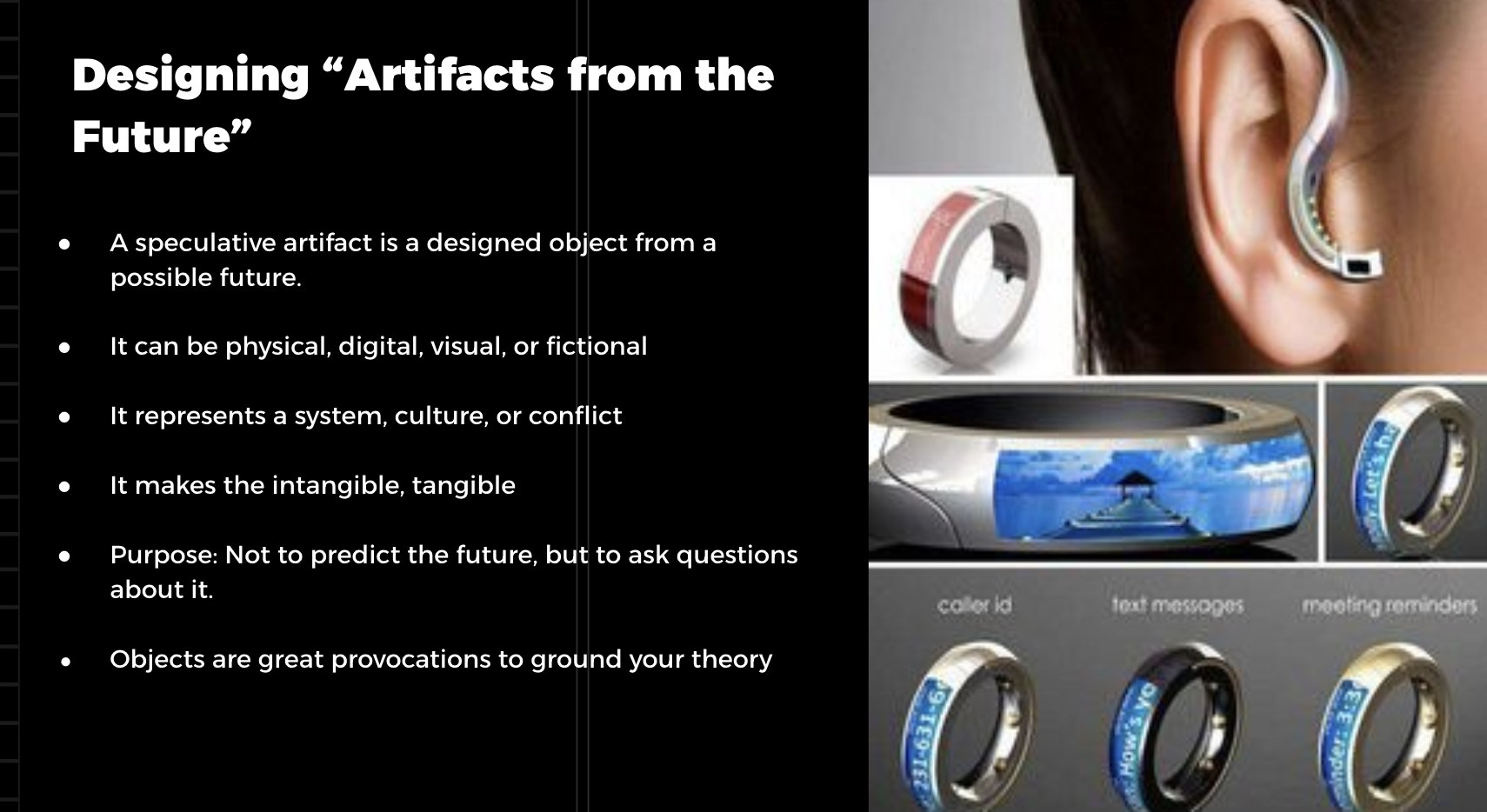
A speculative artifact is a designed object from a possible future. It can be physical, digital, visual or fictional. Its purpose is not to predict the future, but to ask questions about it. Objects are great provocations to ground your theory.
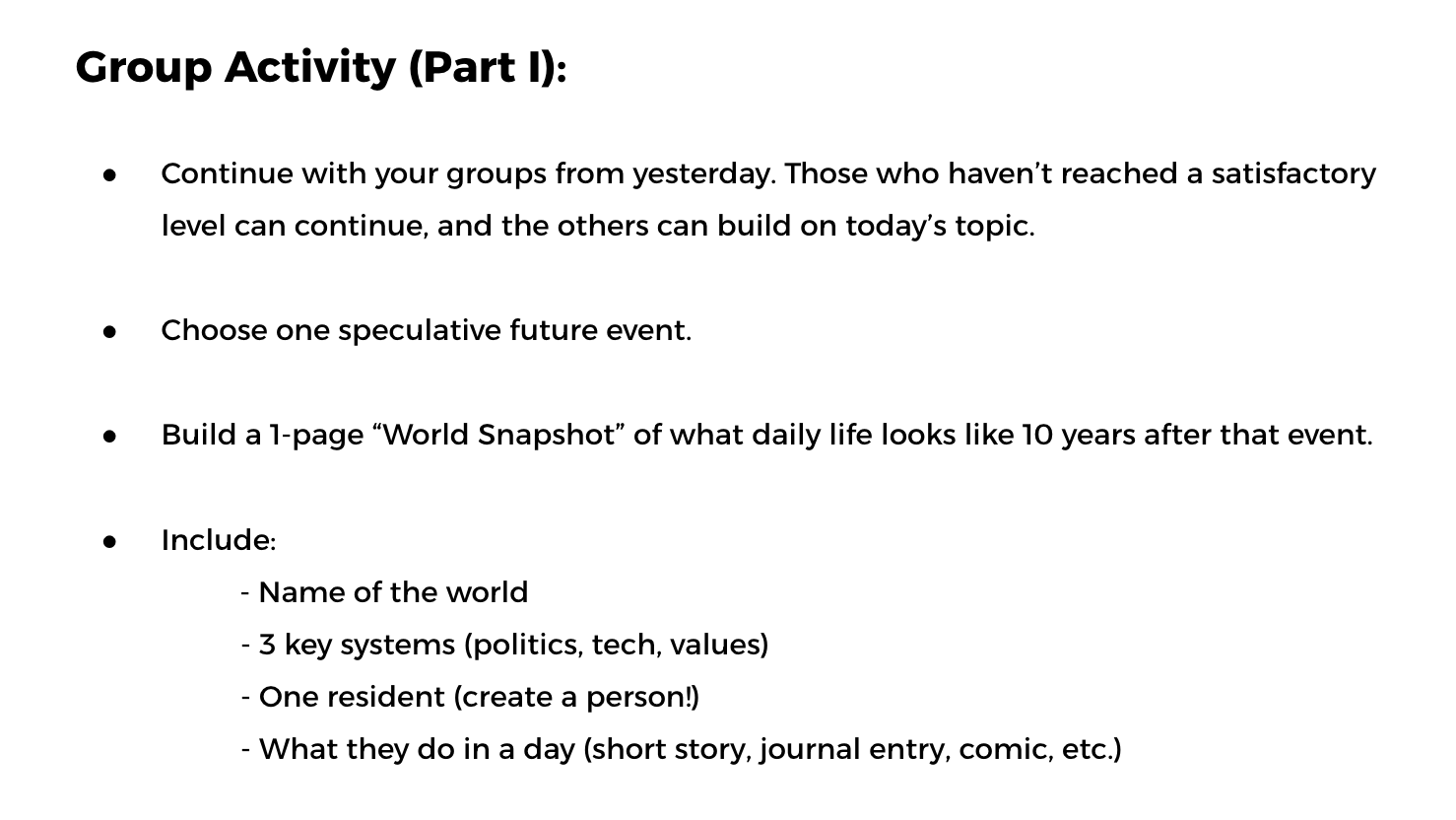
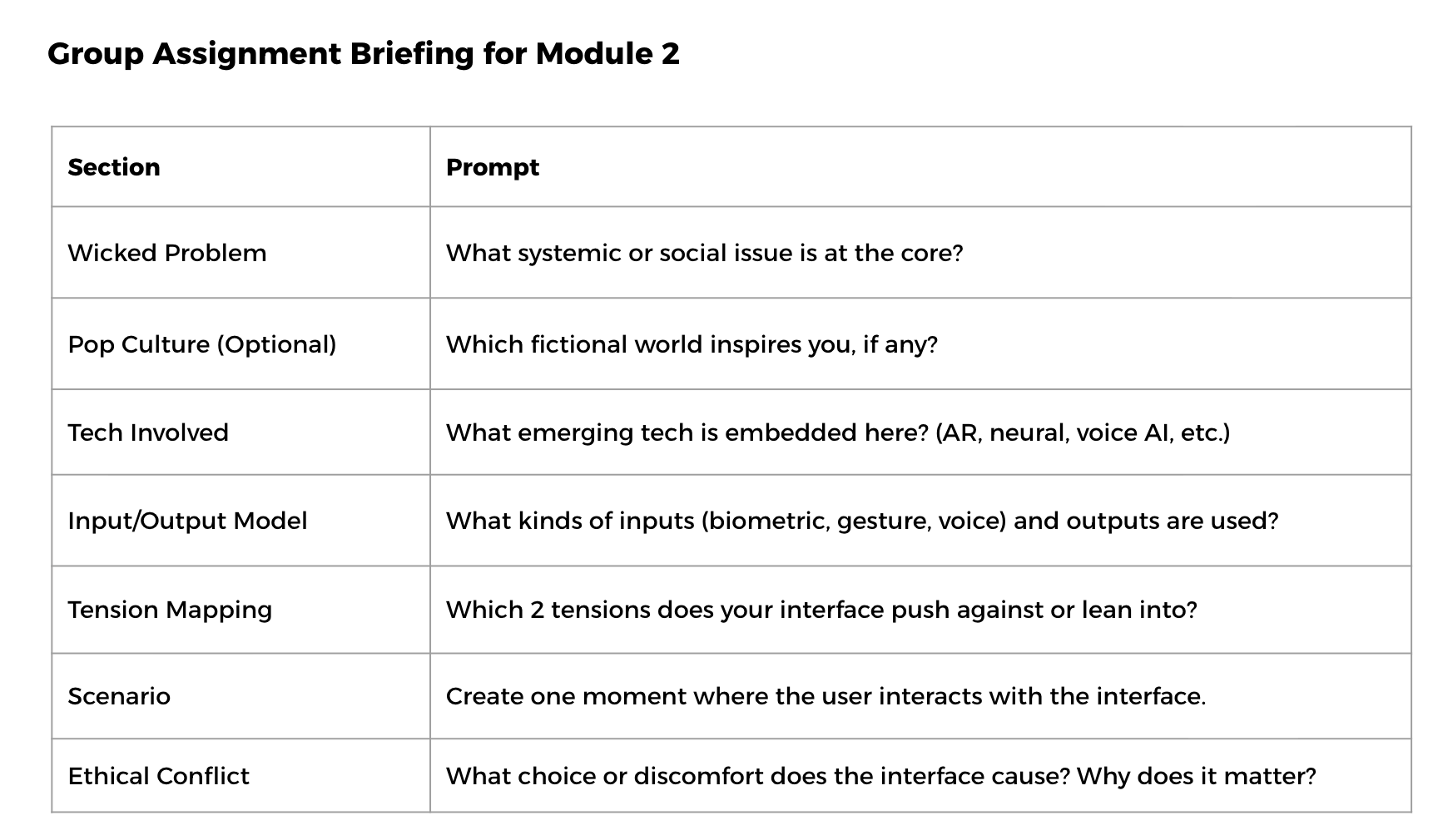
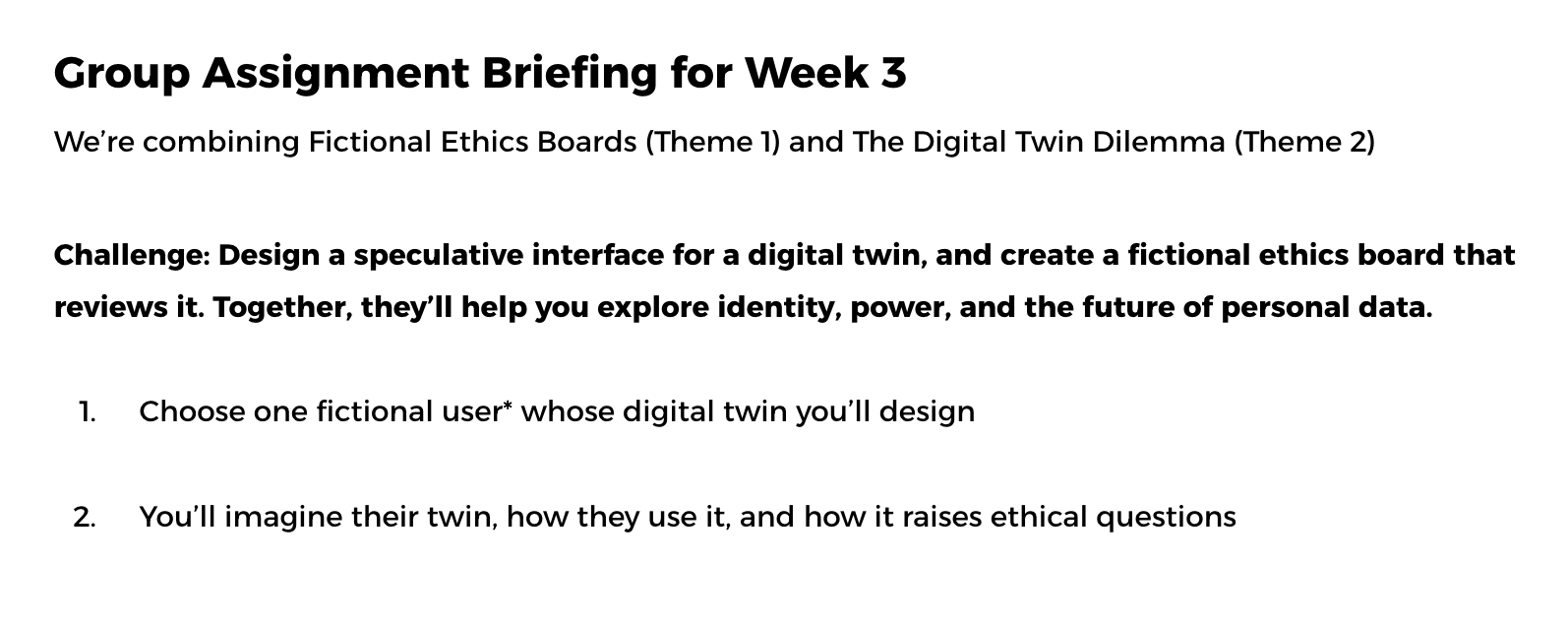
The briefs escalated in scope. Module 2 asked students to design a speculative interface and map its ethical tensions. Module 3 combined two themes, fictional ethics boards and the digital twin dilemma, into a single challenge: design a speculative interface for a digital twin, and create a fictional ethics board that reviews it.
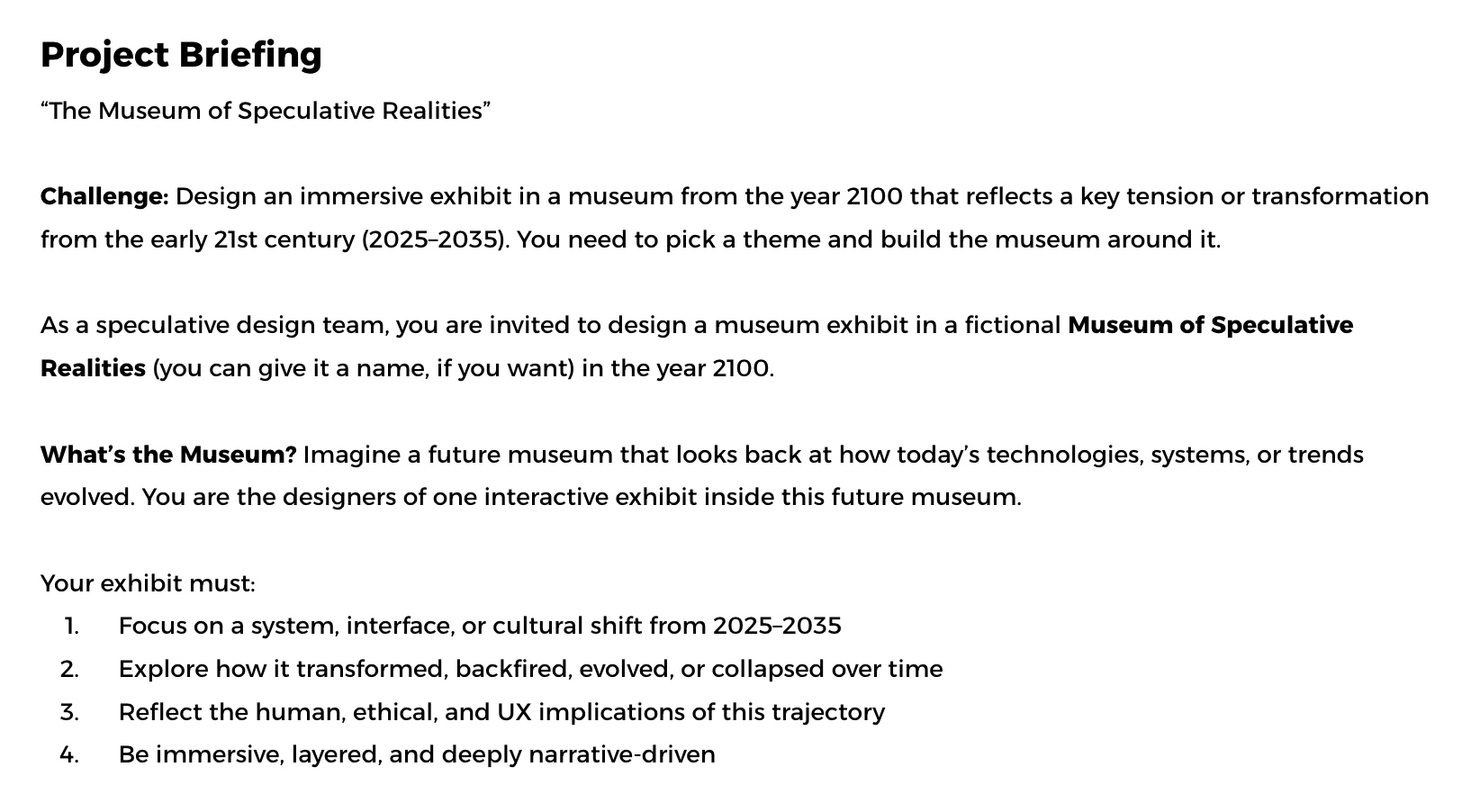
The final brief was the most ambitious. Students were invited to design an immersive exhibit in a fictional Museum of Speculative Realities, set in the year 2100, looking back at how a system, interface or cultural shift from 2025 to 2035 transformed, backfired, evolved or collapsed over time.
This was the culmination: everything from worldbuilding through artifact design through ethical critique, assembled into a single immersive, narrative-driven exhibit.
The last question
A good speculative project doesn\'t end with 'look how cool this future is.' It asks: 'what happens if this actually becomes normal?'
A different visual language.
This project gave me an opportunity to use a completely different visual language from my other case studies. Instead of Figma flowcharts and wireframes, the speculation needed to be made visible through timelines, behaviour chains and future scenarios.
Future scenario timeline
Behaviour chain: from current behaviour to design question
The method
The behaviour chain traces how an emerging technology moves from new possibility to new behaviour to unintended consequence, ending with the design question that should have been asked first.
My contribution.
A summer school can otherwise look like "I attended an interesting course." The distinction that matters is between programme learning and my own design contribution.
My work spanned three areas: synthesising programme material into a personal research framework, designing speculative concepts and scenarios, and applying critical thinking to examine behavioural and ethical implications.
Research
- →Synthesis of programme material
- →Exploration of future-facing themes
- →Investigation of emerging interaction paradigms
Design
- →Concept and prototype development
- →Experience definition
- →Interaction exploration
- →Visualisation and scenario building
Critical thinking
- →Examining behavioural implications
- →Identifying tensions and unintended consequences
- →Considering ethical and social implications
On private material.
The programme involved extensive research, lectures, readings and studio material. Some of the underlying teaching materials and research resources are not publicly available.
This case study focuses on my own synthesis, design work and reflections rather than reproducing programme content. The reference slides shown here are used as context, not as the primary evidence.
Research note
Programme materials, student work and institutional details are not publicly available. This exploration presents my own synthesis, design work and reflections.
A personal future-design position.
Speculative design changed the way I think about the role of UX.
Designing for the future isn't necessarily about predicting what technology will exist. It is about asking what kinds of experiences, behaviours and relationships that technology could create, and deciding which of those futures are worth designing for.
I'm particularly interested in this space where UX, emerging technology and extended reality overlap. That is where the next generation of interaction design will happen, and I want to be part of shaping it thoughtfully.
What I'm taking forward
The question isn\'t just 'what can we build?' It's 'what should we build, and what happens after we do?'
Kärcher says I can operate at scale.
Sherpa says I can build from zero.
Speculative says I can think beyond today.
Three different design challenges, three different formats, one designer. Scale, creation, exploration.
Back to Work
