Losing 20 kg
Through Designed Behaviour
A UX study in habit formation, feedback loops, friction and self-regulation. For more than a year, I treated my own weight-loss process as a behavioural design problem.
The premise
I didn't lose 20 kg by becoming more disciplined. I redesigned the system that required discipline. The interesting part isn't the number, it's what happened when I stopped treating weight loss as a goal and started treating it as a behavioural system.
I was tired of feeling heavy and not my best self.
I was tired of feeling heavy and not my best self. By default, I inherently achieve the things I really set my mind to, so I thought of using my system design and analytical mind to lose weight and set a fitness goal.
Even though I am not completely there, I am so close to my goal, and the approach of combining UX and system design has helped me come a long way. Here is a detailed breakdown of the process.
The starting point
Not a fitness journey. A systems design problem I happened to be living inside.
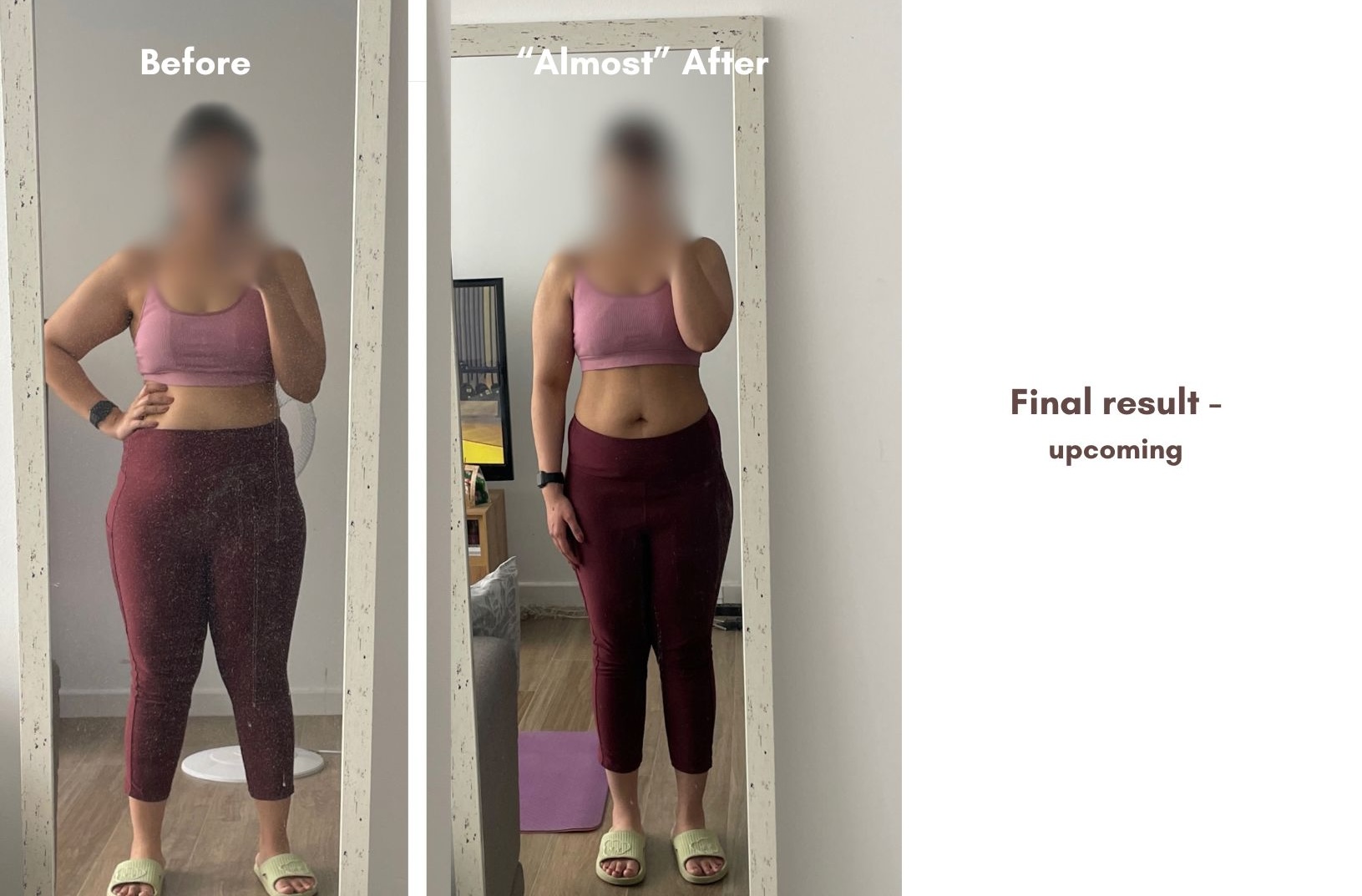
"Lose weight" is a poor UX brief.
The obvious brief was: lose weight. But that is a poor UX brief. It describes an outcome without describing the system required to produce it. So I reframed it.
From "how do I lose 20 kg?" to "how might I design a system of behaviours that I can repeat consistently enough for the outcome to emerge?" That distinction became the foundation of the project.
The reframing
How might I design a system of behaviours that I can repeat consistently enough for the outcome to emerge?
The problem wasn't motivation. It was decision fatigue across hundreds of repetitions.
My day contained dozens of tiny interactions. When should I walk? What should I eat? How much? Should I work out today? Did I move enough? None of these decisions was particularly difficult individually. The problem was decision fatigue across hundreds of repetitions.
This made the project less about motivation and more about friction, defaults, feedback, habit loops, cognitive load, measurement, reward and recovery from failure. In other words: UX.
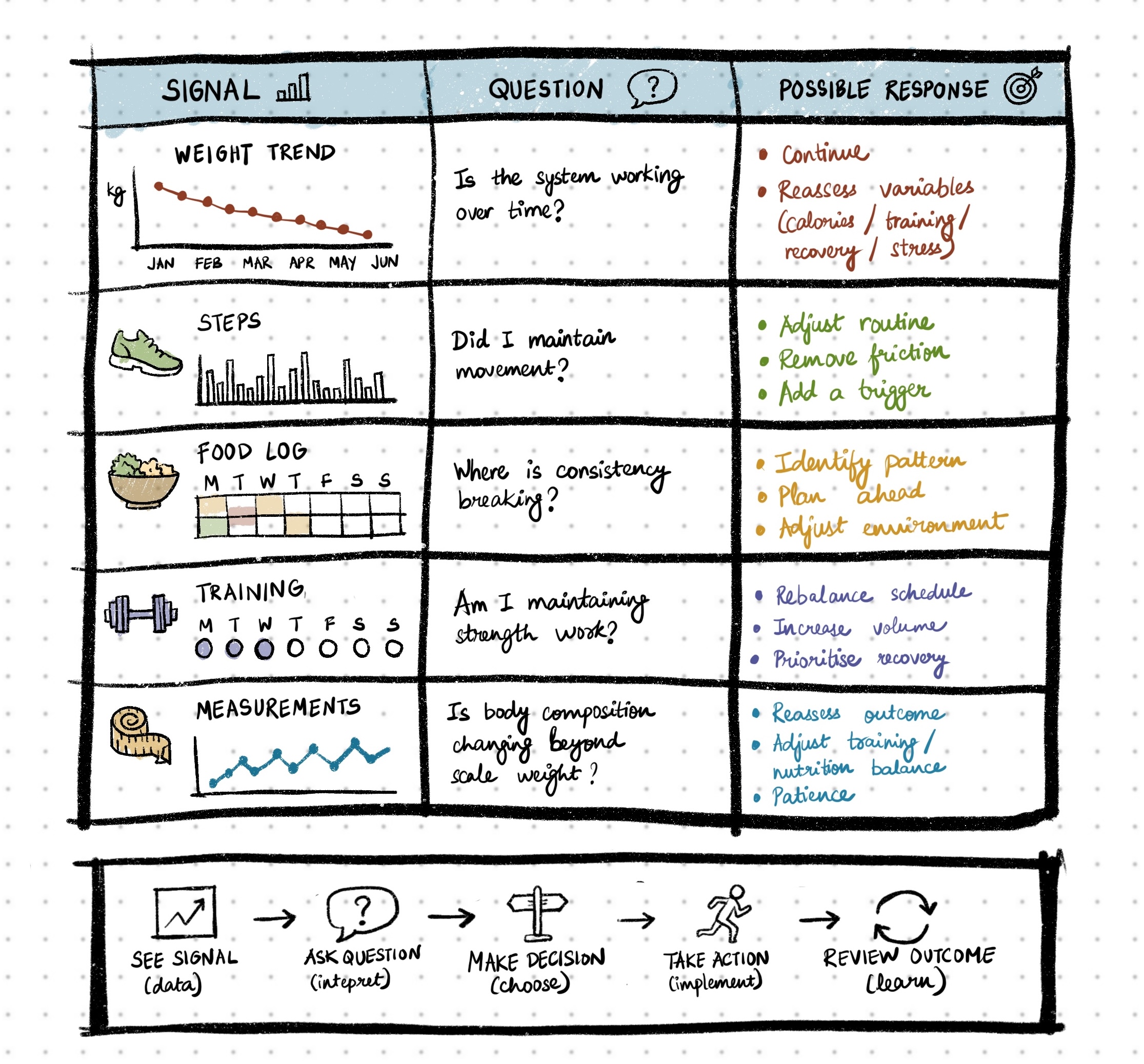
Tracking wasn't the goal. Feedback was.
I mapped the process as: intention → daily action → tracking → feedback → interpretation → adjustment → next action. This created a closed behavioural loop. The critical insight: a number only became useful when it changed what I did next.
Key insight
Tracking wasn't the goal. Feedback was. A number only becomes useful when it changes what you do next.
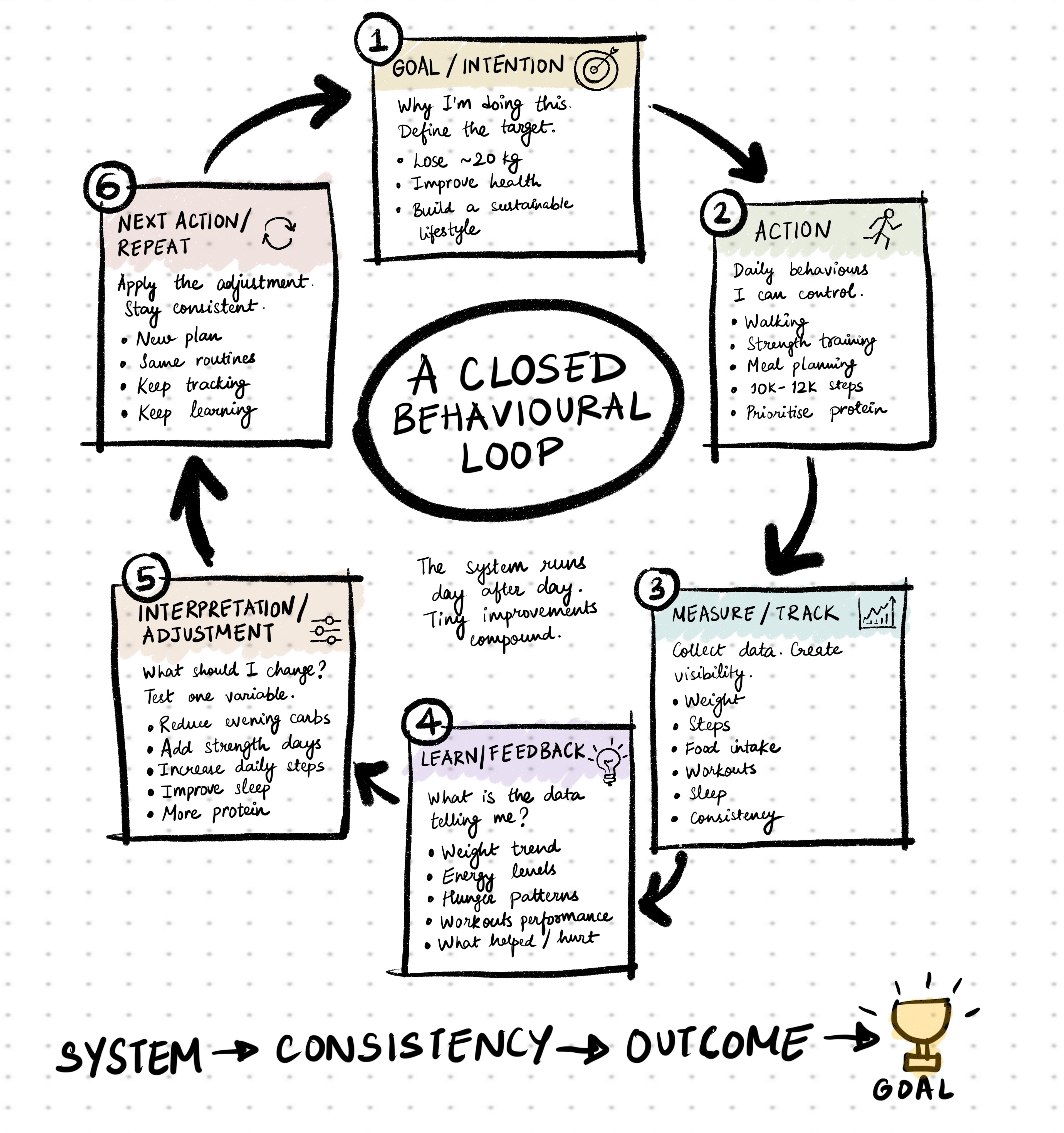
Longitudinal, first-person behavioural data.
This wasn't a conventional UX research project with a participant sample. I had something different: longitudinal, first-person behavioural data. I documented the system over an extended period rather than evaluating it in a single session.
Inputs tracked
- →Body-weight trend
- →Food intake · protein intake
- →Daily movement · walking consistency
- →Strength training · workout patterns
- →Routine adherence
- →Measurements · subjective observations
- →Periods of stalled progress
Research methods
Longitudinal self-observation
Observing behaviour over months rather than isolated moments.
Quantitative tracking
Using numerical data to identify patterns.
Behavioural journaling
Recording what happened and why.
Iterative experimentation
Changing one variable and observing the result.
Retrospective analysis
Distinguishing patterns from temporary fluctuations.
From the archive · real food tracking data


Motivation is an unreliable interface.
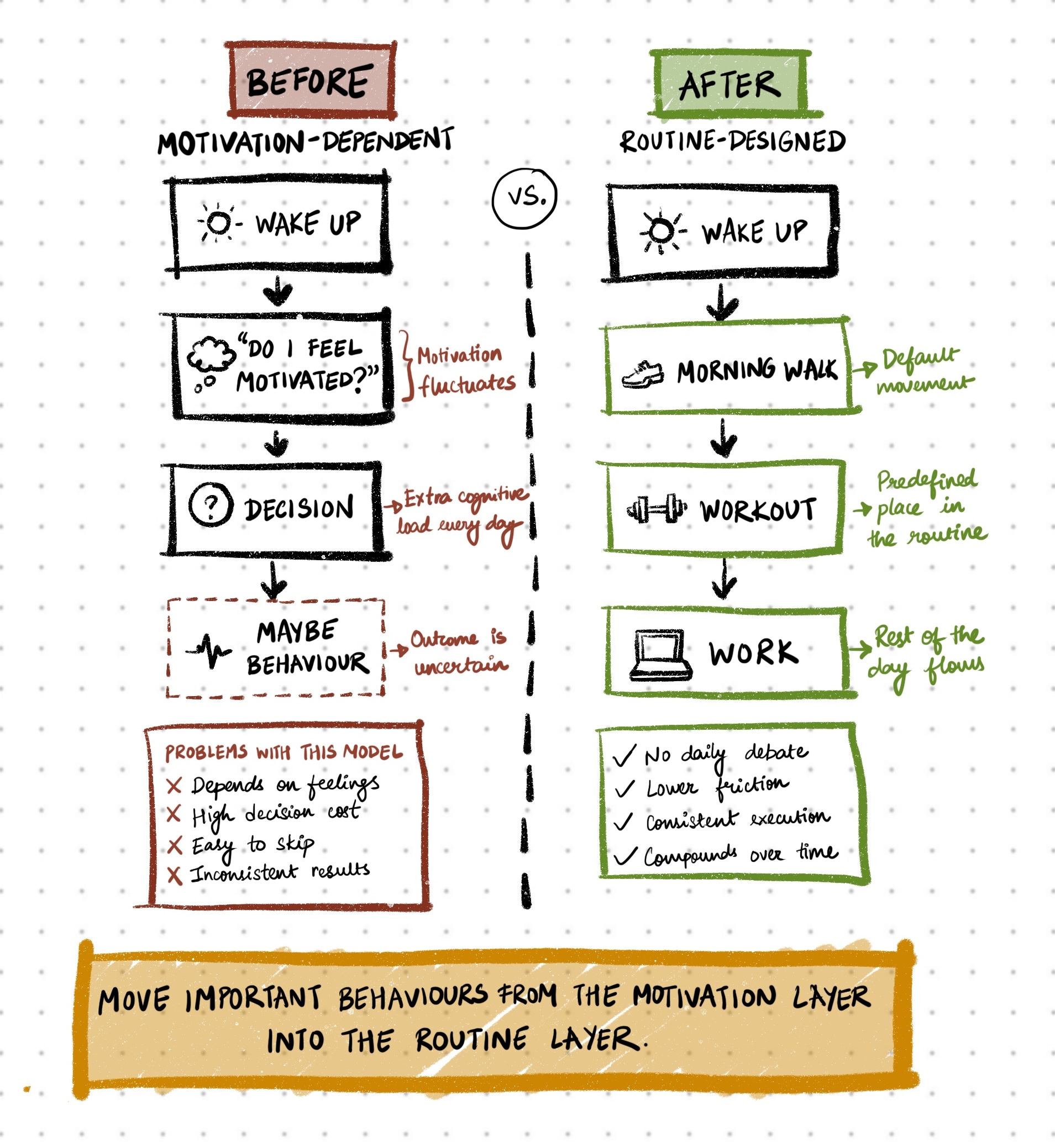
At the beginning, motivation was doing a lot of the work. But motivation fluctuates. A system that requires me to want to do the behaviour every day is inherently fragile. So I started designing defaults.
Instead of "should I walk today?" the system became: walking is already part of the day. Instead of "should I work out?" the workout had a predefined place in the routine. I reduced the number of decisions required.
Key insight
Move important behaviours from the motivation layer into the routine layer.
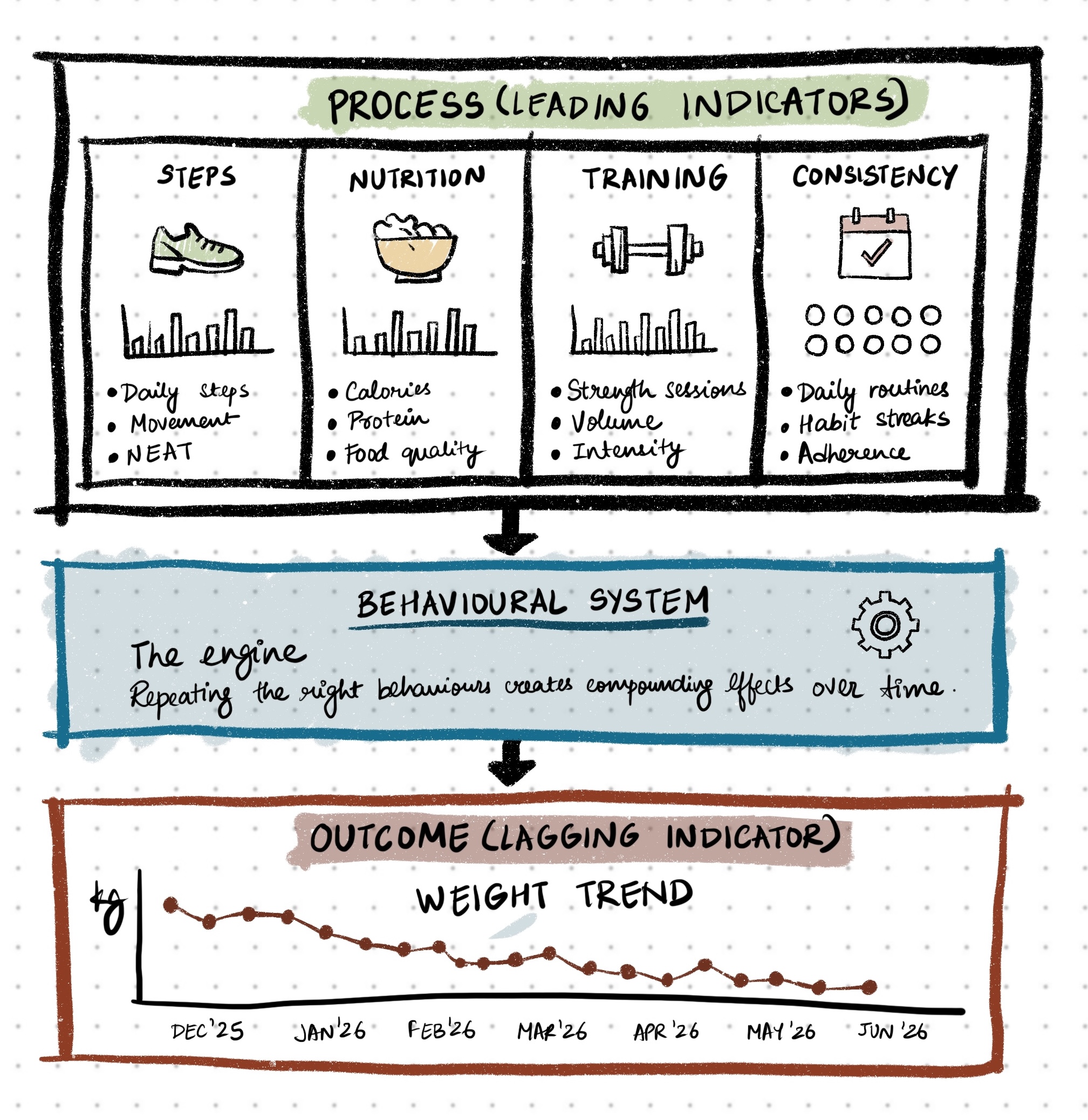
Weight is a lagging indicator. Walking happens today.
The smallest unit of progress wasn't kilograms. It was behaviour. Weight is a lagging indicator. Walking happens today. A workout happens today. A meal happens today. Weight may change days later. That creates a feedback problem.
If the only success metric is the scale, behaviour can feel unsuccessful even when the underlying system is working. So I began distinguishing between outcome metrics and process metrics.
Key insight
Don't ask the outcome metric to provide daily feedback on a process it only reflects retrospectively.
Every metric needs a decision attached to it.
Tracking only works when it changes behaviour. It is easy to become obsessed with measurement. More data does not necessarily produce better decisions. The question I repeatedly returned to: what will I do differently because I know this?
The question I repeatedly returned to
Design principle
What will I do differently because I know this? If the answer is nothing, the metric is noise.
Fitness stopped being an event and became an environmental property of the day.
Eventually, the system became less about "working out" and more about time architecture. The behaviours were distributed through the day. The crucial design move was embedding movement into existing routines rather than treating fitness as one isolated activity.
MORNING
- →Movement
- →Workout
- →Breakfast
WORKDAY
- →Work
- →Walking breaks
- →Lunch
AFTERNOON
- →Focused work
- →Movement
EVENING
- →Reading
- →Hobbies
- →Dinner
- →Sleep
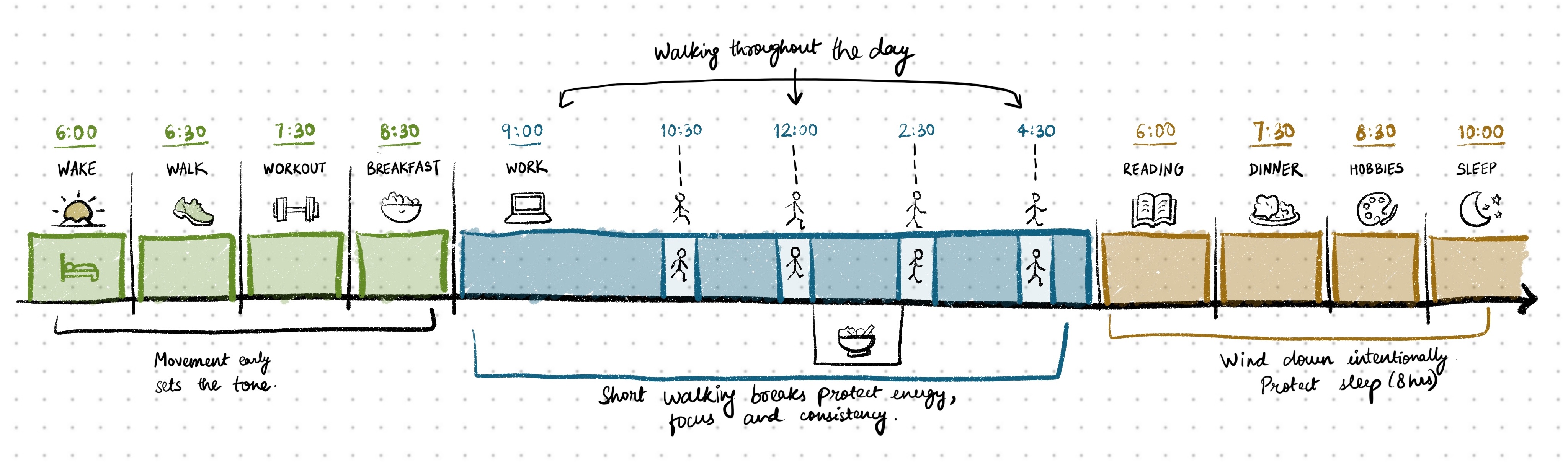
From the archive · the daily system in practice
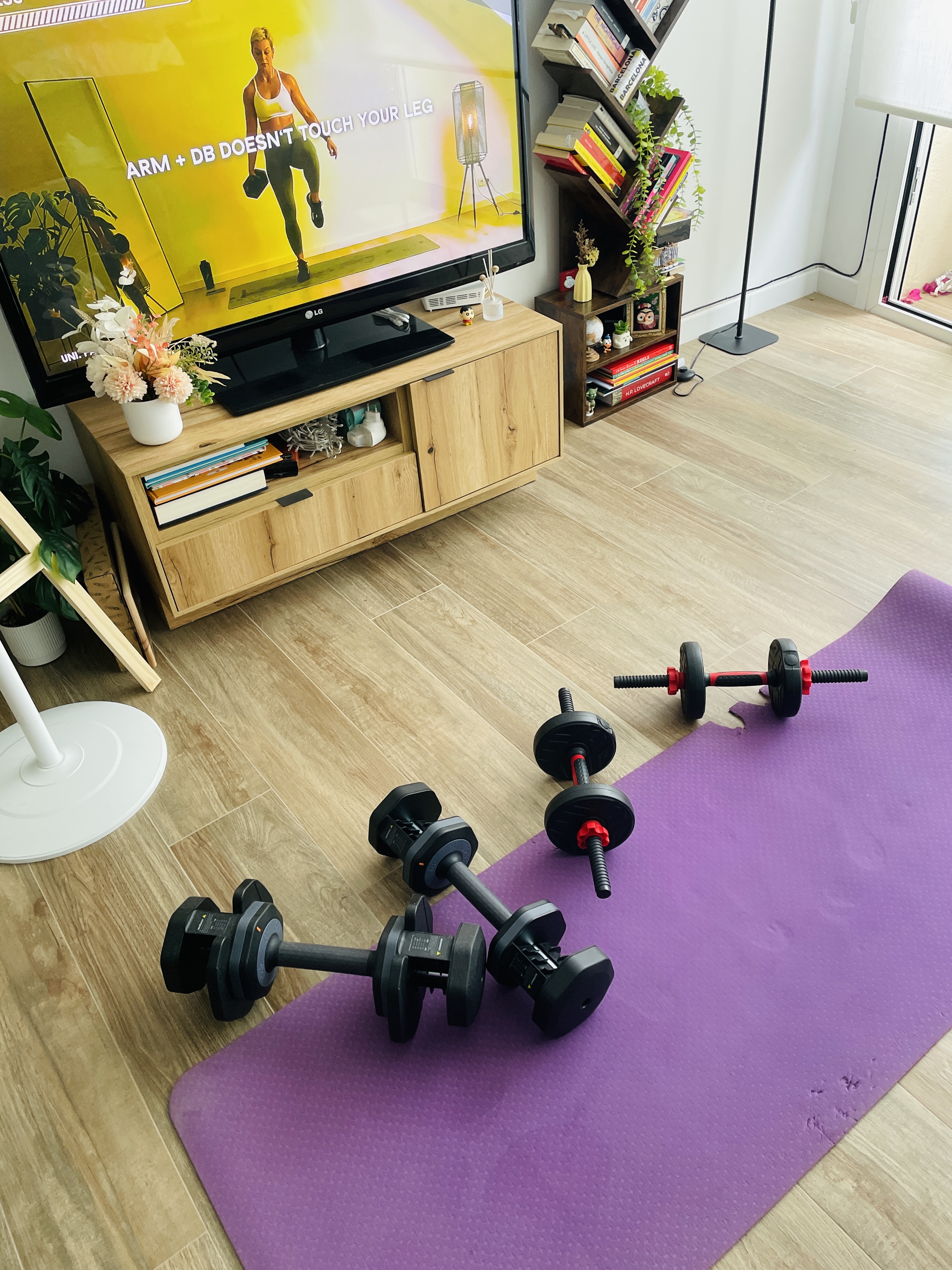
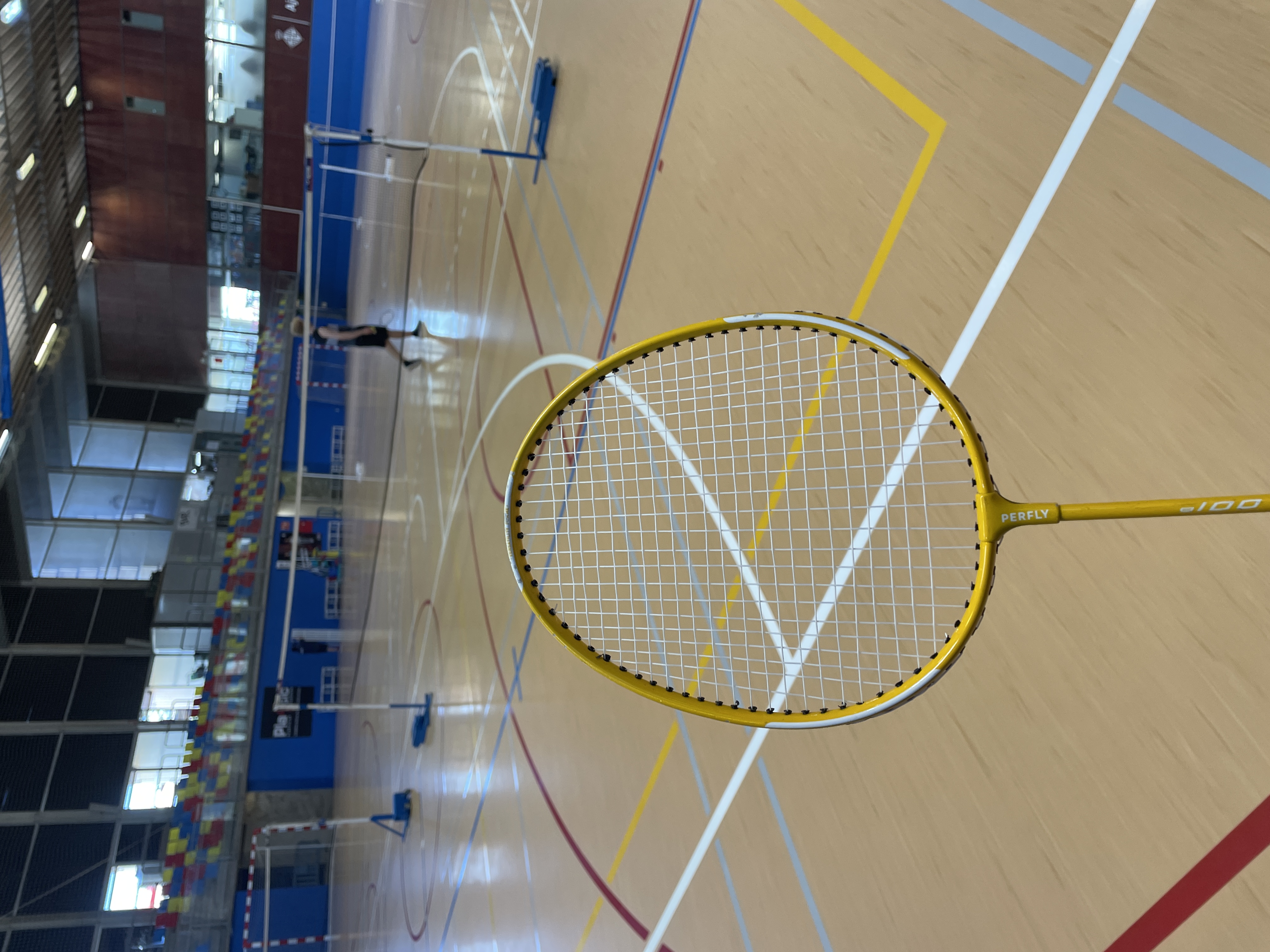
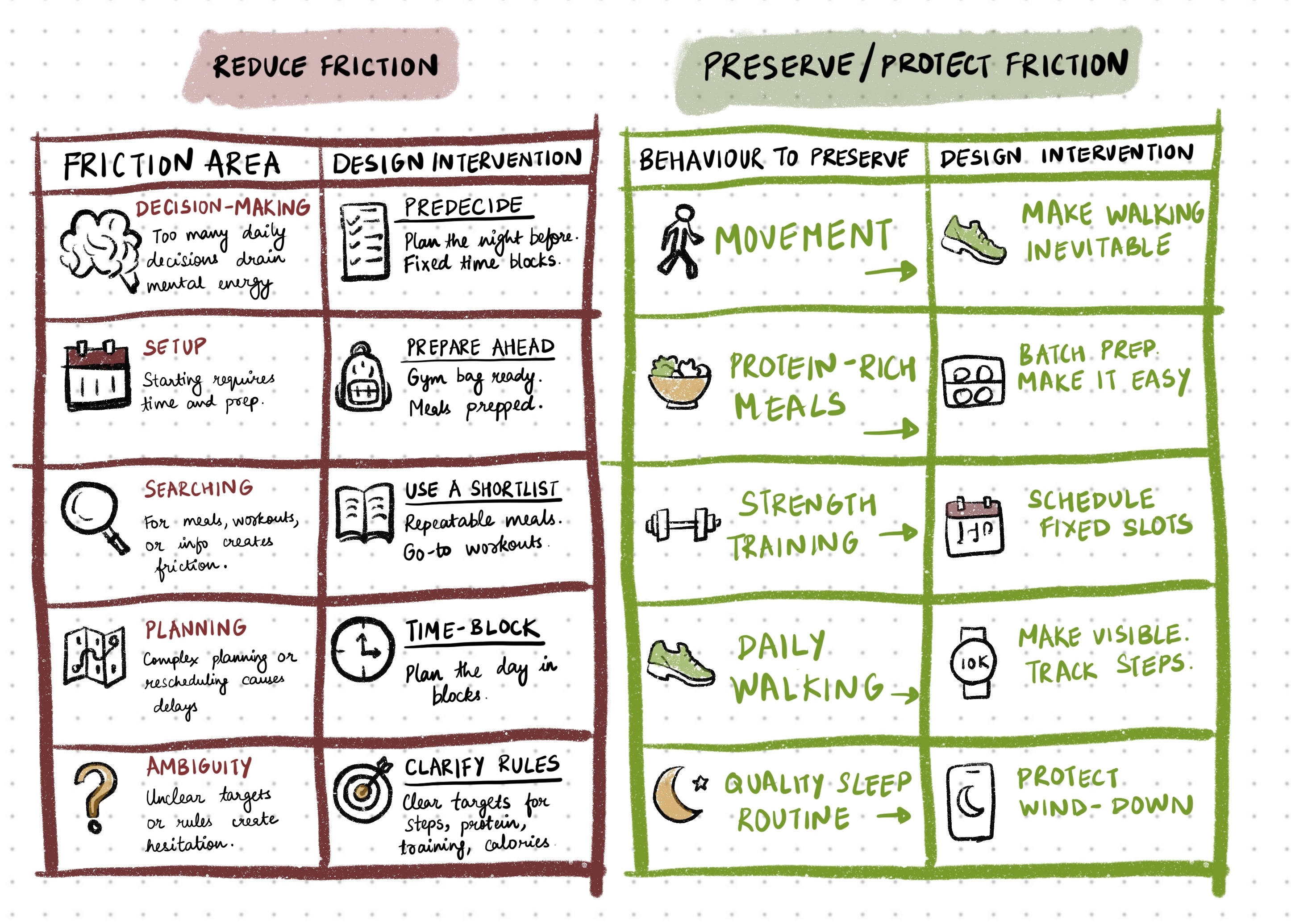
Reduce friction for desirable behaviour. Increase friction for behaviours that undermine the system.
I began identifying friction points. The design objective became clear: reduce friction for desirable behaviour and increase friction for behaviours that undermine the system.
High friction
- −Deciding what to do
- −Fitting movement around work
- −Interpreting inconsistent scale readings
- −Maintaining consistency during disrupted routines
- −Making too many food decisions
Low friction
- +Predefined workout slots
- +Walking integrated into breaks
- +Repeatable meal structures
- +Visible tracking
- +Predetermined daily targets
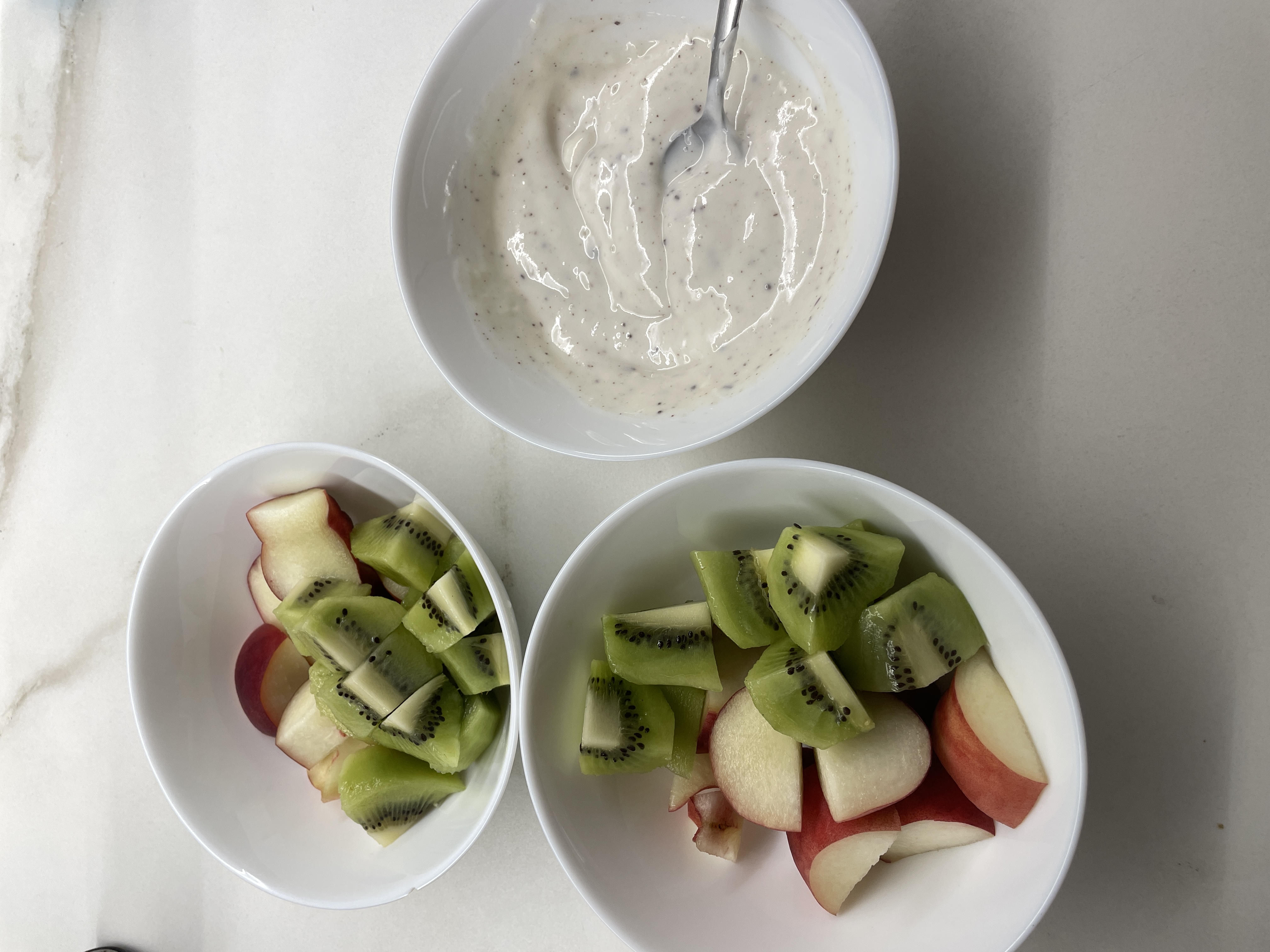
From the archive · repeatable meal structures


Daily numbers fluctuate. The user can interpret temporary variation as system failure.
One of the most important discoveries was that the scale could produce misleading feedback. Daily numbers fluctuate. The user can interpret temporary variation as system failure. That creates an extremely dangerous feedback loop.
Key insight
A good tracking interface must distinguish meaningful change from normal variability.
The dangerous feedback loop
- ↓Scale increases
- ↓"I failed"
- ↓Overcorrection
- ↓Unsustainable behaviour
- ↓Fatigue
- ↓System breaks
"Why am I failing?" became "which assumption is no longer valid?"
Eventually, the system stopped behaving as predictably. Progress slowed. This was arguably the most valuable part of the project. Because the system had worked before, I could have interpreted the plateau as failure.
Instead, I treated it as new data. The question changed from "why am I failing?" to "which assumption in the current system is no longer valid?" That is a fundamental research mindset.
Key insight
A system that stops working has revealed an assumption worth investigating.
Each adjustment was an experiment, not a punishment.
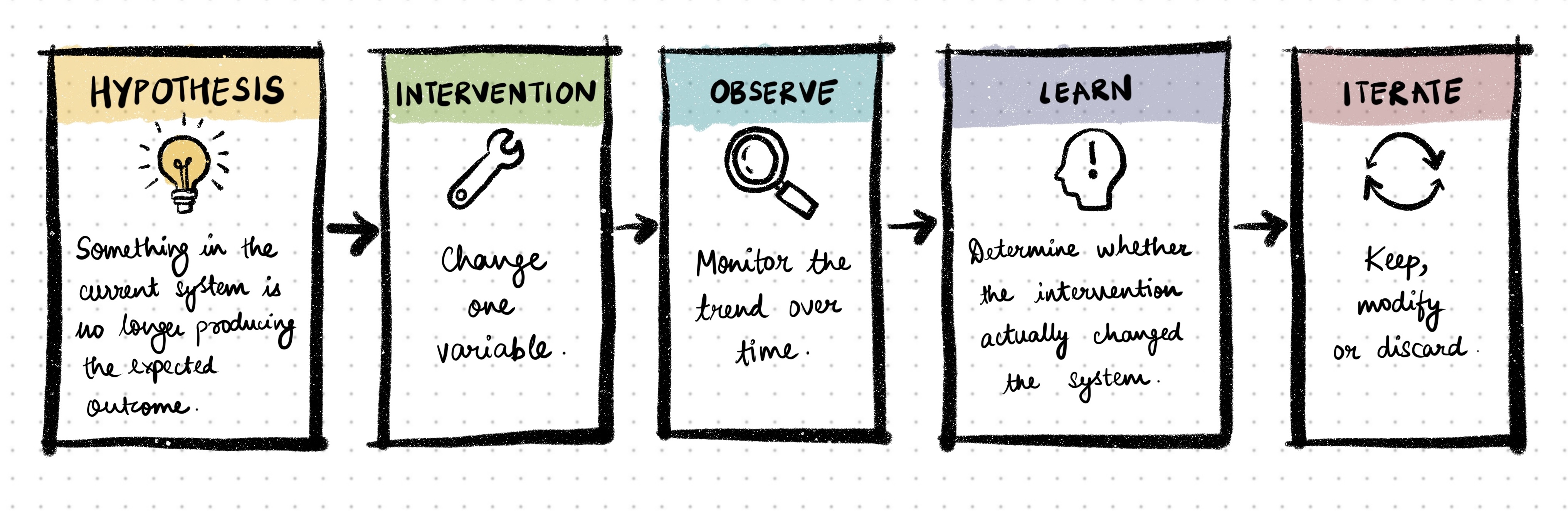
I started treating each adjustment as an experiment rather than a punishment. Change one variable, observe the trend over time, determine whether the intervention actually changed the system, then keep, modify or discard.
Hypothesis
Something in the current system is no longer producing the expected outcome.
Intervention
Change one variable.
Observe
Monitor the trend over time.
Learn
Determine whether the intervention changed the system. Keep, modify or discard.
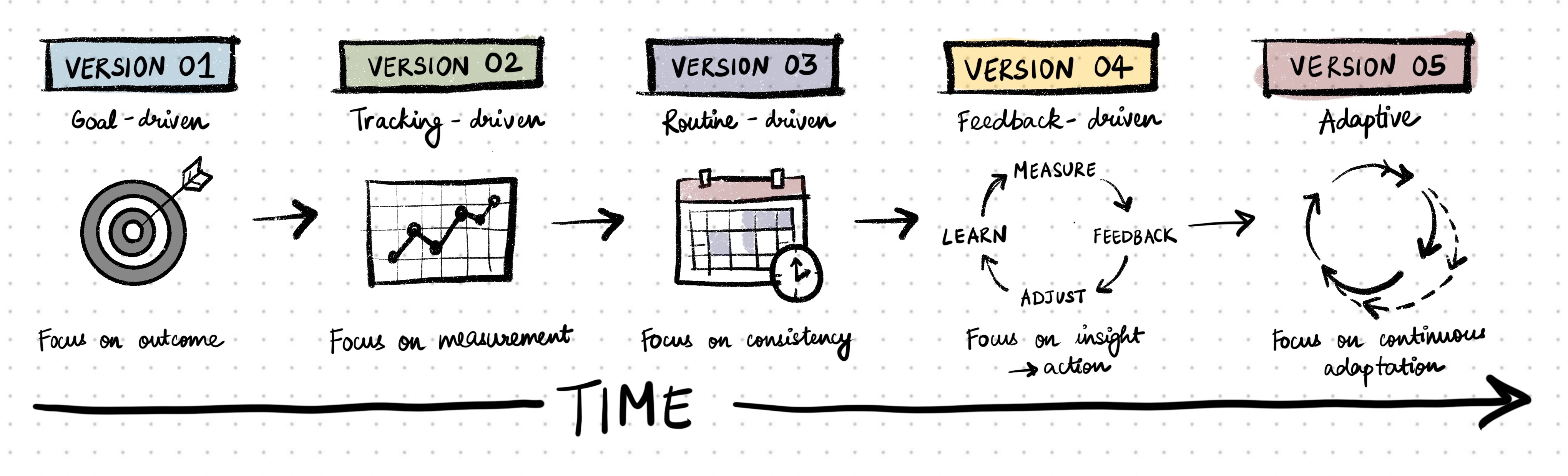
The final system was not the system I started with.
The design itself evolved as I learned more about the user. And the user was me. Version 01 was goal-driven. Version 02 was tracking-driven. Version 03 was routine-driven. Version 04 was feedback-driven. Version 05 was adaptive.
I designed a system in which discipline was required less often.
Approximately 20 kg lost. But the weight is only one output. The more interesting outcome was the system that produced it. The outcome was not "I became disciplined enough to lose weight." It was: I designed a system in which discipline was required less often.
The important part wasn't avoiding failure. It was building a system capable of recovering from it.
The system didn't work perfectly. There were periods where progress stalled, routines had to change, the intended behaviour didn't happen, measurements contradicted expectations, and strategies that looked logical weren't sustainable.
The system didn't work perfectly
- ✕Periods where progress stalled
- ✕Periods where routines had to change
- ✕Days where the intended behaviour didn't happen
- ✕Measurements that contradicted expectations
- ✕Strategies that looked logical but weren't sustainable
Failure → recovery loop
- ↓SYSTEM
- ↓DISRUPTION
- ↓OBSERVATION
- ↓INTERPRETATION
- ↓ADJUSTMENT
- ↓RECOVERY
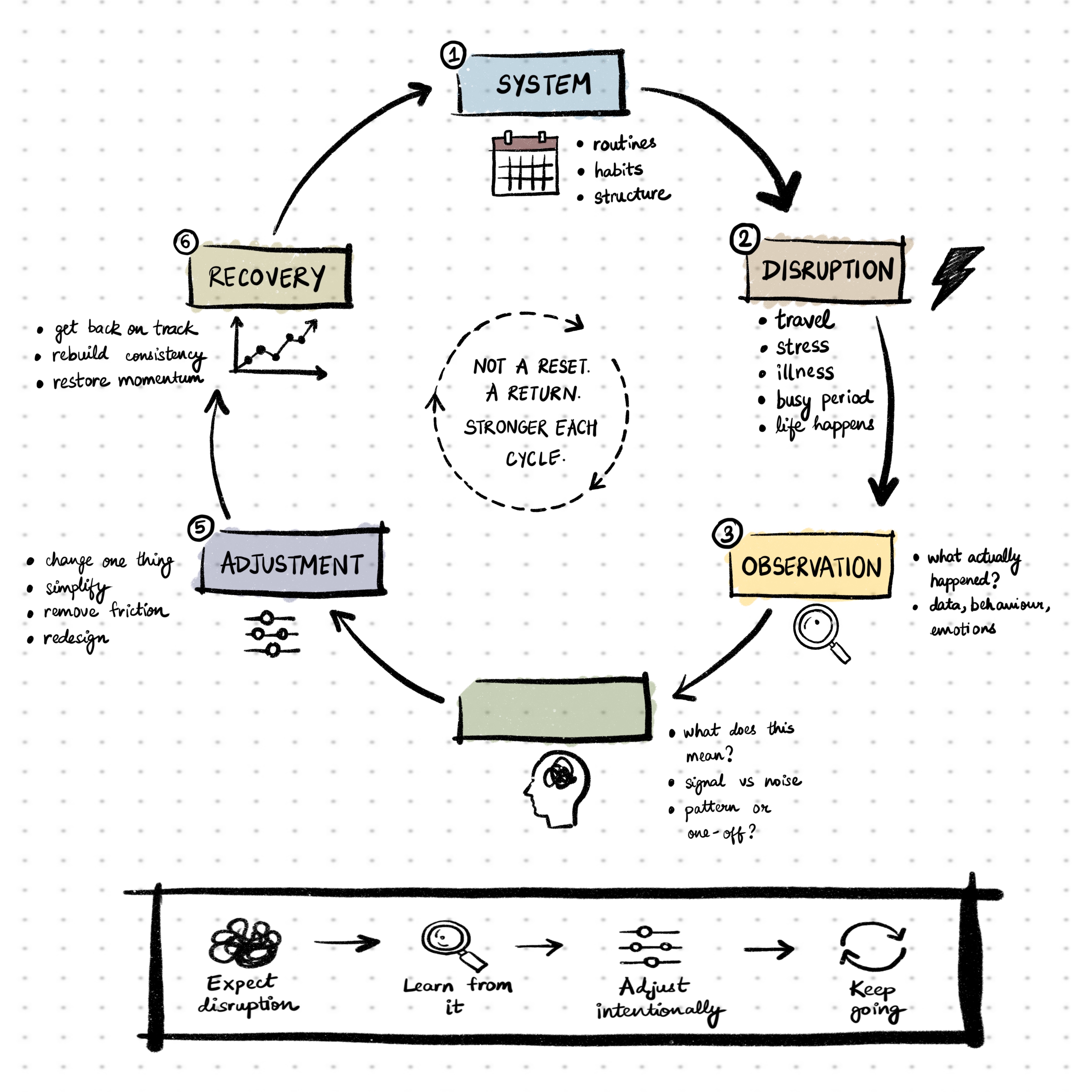
Six principles I took from it.
Design defaults, not motivation.
If a behaviour matters, give it a place in the system.
Separate process feedback from outcome feedback.
A lagging metric cannot effectively guide every daily decision.
Reduce decision density.
The fewer unnecessary choices a routine requires, the easier it is to repeat.
Treat plateaus as research data.
A system that stops working has revealed an assumption worth investigating.
Design for recovery.
The best systems aren't those that never break. They're those that make restarting easy.
Measure what you can act upon.
Data without a decision is decoration.
Good behaviour design isn't about manipulating people. It's about changing the environment around the behaviour.
This project began as a personal weight-loss experiment. It became an exploration of something much broader: people don't fail systems only because they lack motivation. Sometimes the system itself creates too many decisions, poor feedback, delayed rewards, ambiguous signals, excessive friction and unrealistic expectations.
Good behaviour design isn't about manipulating people into doing something. It's about changing the environment around the behaviour so that the desired action becomes easier to repeat.
Key insight
Good behaviour design changes the environment around the behaviour so the desired action becomes easier to repeat.
The same principles apply to finance, learning, health and productivity.
This is where the case study becomes unmistakably UX rather than personal development. The same principles, defaults, feedback, friction, adaptation, apply across domains.
Instead of
"Save more."
Design
Automatic defaults + visible progress + low-friction actions.
Instead of
"Study consistently."
Design
Predictable routines + small milestones + immediate feedback.
Instead of
"Exercise more."
Design
Environmental cues + manageable actions + meaningful feedback.
Instead of
"Be disciplined."
Design
Reduced decision load + defaults + friction management.
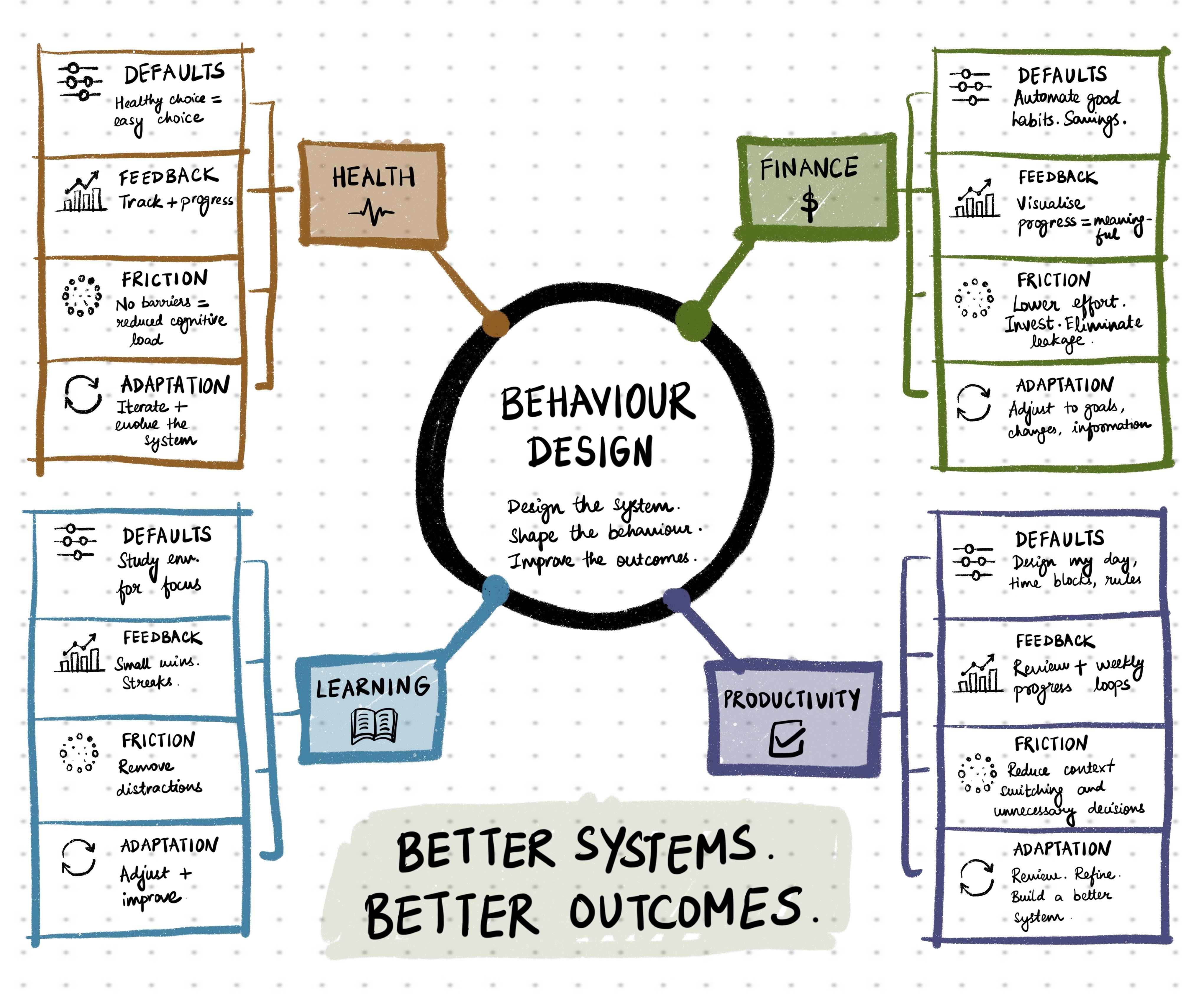
20 kg was the outcome.
The real project was learning how to design for behaviour.
I started by trying to change my body. I ended up changing the way I think about systems. The biggest lesson wasn't that consistency produces results. It was that consistency itself can be designed.
A behaviour repeated once is an action. A behaviour repeated hundreds of times becomes a system. And when the system is thoughtfully designed, the desired outcome can become a consequence rather than a constant battle.

