Six Hobbies, One Life
Designing for Identity Fragmentation
How do you manage so many interests and hobbies, improve in them all, and enjoy them to the fullest, when you do not want to give up on any of them?
The premise
Most apps assume one identity, one goal, one routine. I have six. The problem is not time management, it is designing for a brain that collects interests like Pokémon.
Most apps assume one identity. I have six.
The obvious problem seemed to be: "how do I manage six hobbies?" But that immediately led to a more interesting question: why do conventional productivity tools make having multiple interests feel like a management problem?
Most systems organise life around tasks, goals, projects, deadlines, streaks and completion. That works beautifully when the desired state is DONE. But hobbies often have a different desired state: MORE.
The deeper issue is that most apps assume a single identity. Pick one goal. Build one routine. Track one metric. But creative interests don't behave like that. You don't "complete" painting. You don't finish learning violin. You don't reach 100% of cartography.
Key insight
The goal isn't completion. The goal is continued engagement.
Not a hobby task manager. An interface for identity fragmentation.
I reframed the brief. Not: build a hobby task manager. But: design an interface that helps people maintain a diverse creative practice without converting every interest into a productivity metric.
The product needed to support three competing needs simultaneously: discovery (what am I interested in right now?), continuity (how do I avoid abandoning something I care about?), and progression (how do I know I'm getting better?).
Three competing needs
Discovery
"What am I interested in right now?"
Continuity
"How do I avoid abandoning something I care about?"
Progression
"How do I know I'm getting better?"
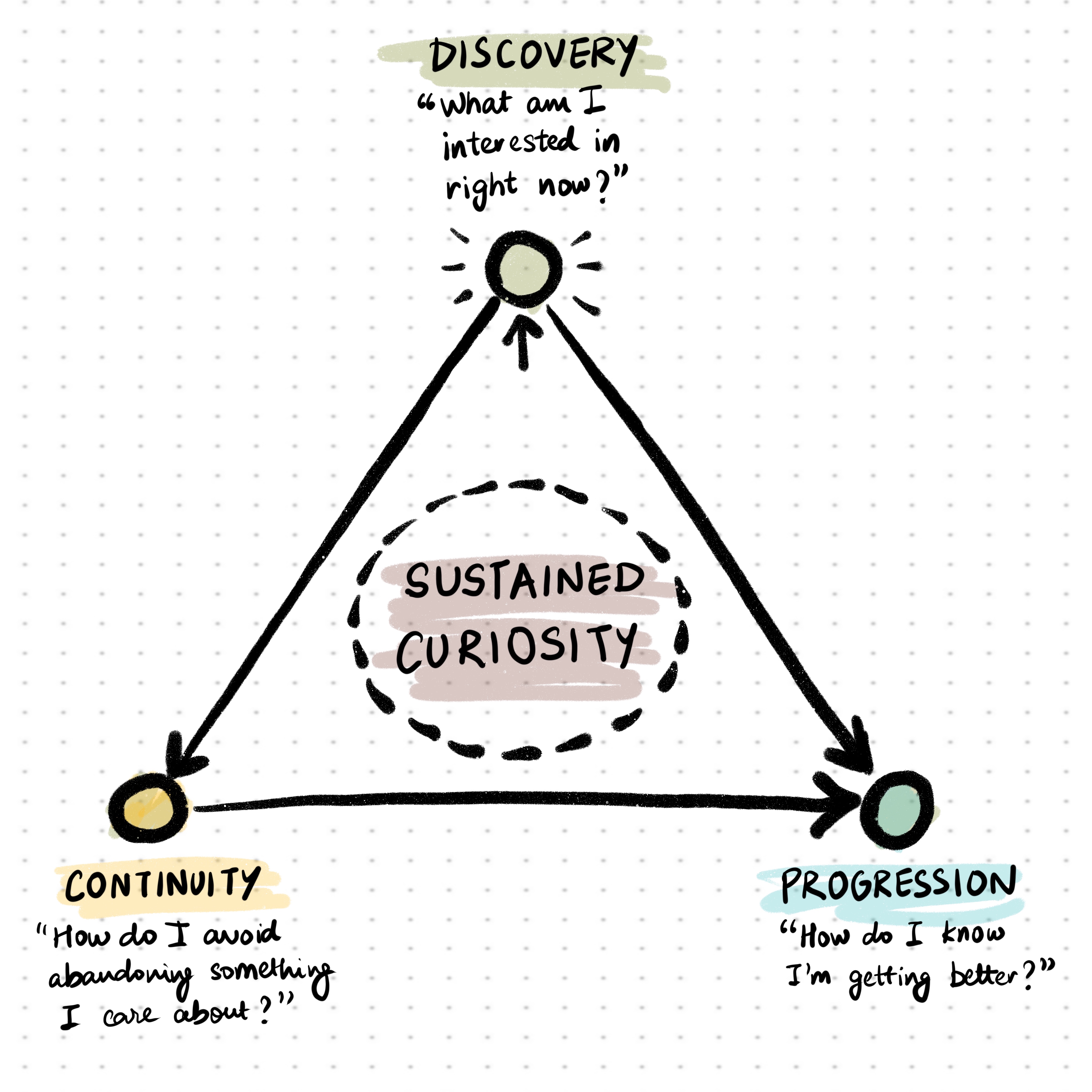
How might we sustain multiple interests without forcing different activities into the same measurement system?
The research question became clear: how might we help people sustain multiple interests without forcing fundamentally different activities into the same measurement system?
How do people decide which hobby to pursue on a given day?
How do they perceive progress when the activity has no clear endpoint?
What causes hobbies to disappear from everyday life?
Can an interface encourage continuity without creating pressure?
Self-observation, competitive analysis, activity mapping, behavioural analysis, and IA analysis.
This project combined multiple research approaches to understand both the behaviour and the existing tool landscape.
Self-observation
I documented how I naturally moved between interests over months.
Competitive analysis
Examined habit trackers, productivity tools, learning platforms, reading trackers, and creative project-management tools.
Activity mapping
Mapped the different types of work each hobby actually involved.
Behavioural analysis
Looked for patterns in initiation, abandonment, switching, returning, progress perception and motivation.
IA analysis
Asked what a "hobby" should actually contain. The answer: sometimes a goal, a project, a routine, a skill, a collection, a practice, and sometimes none of them.
From the archive · the six interests, in practice
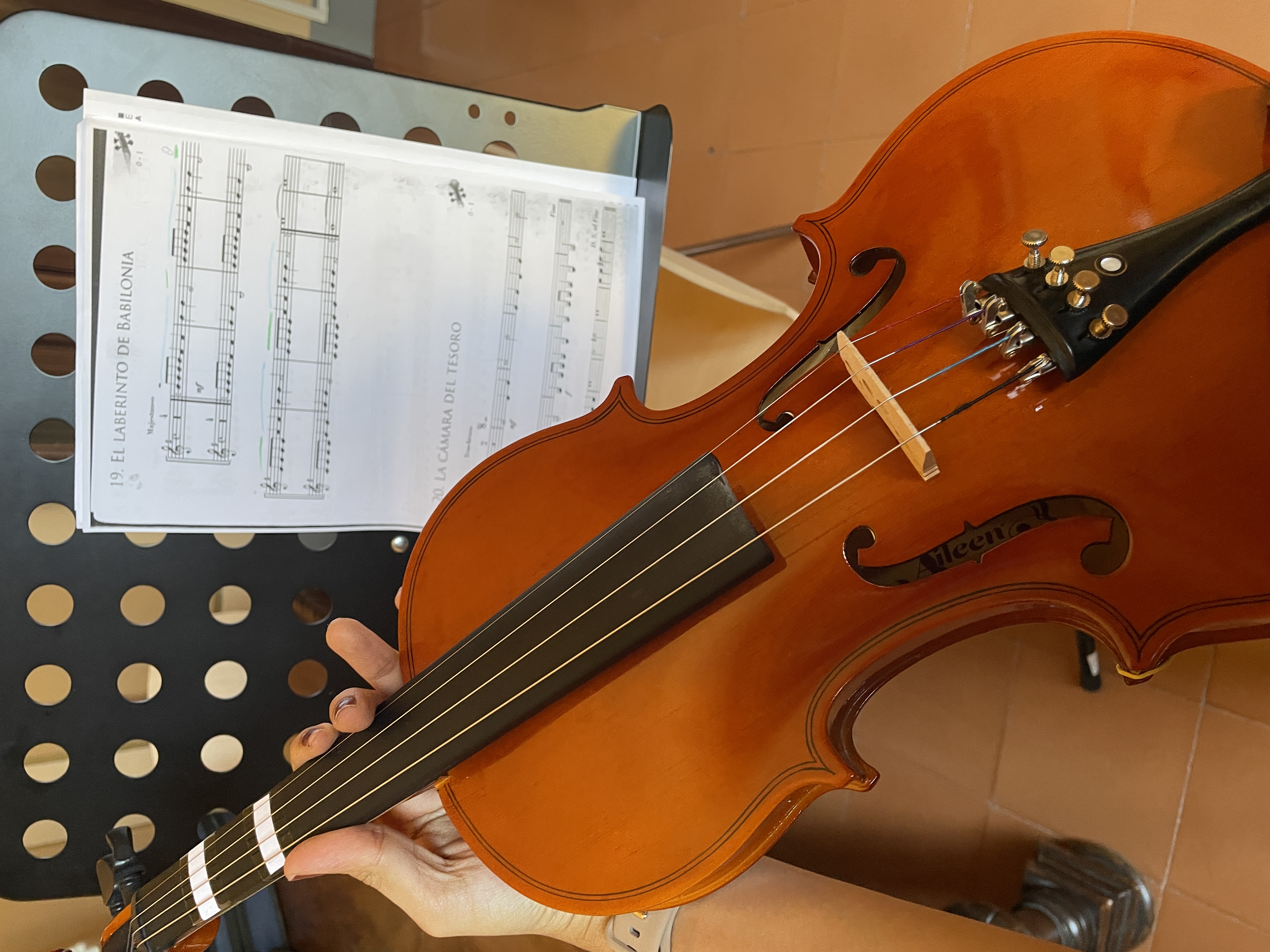
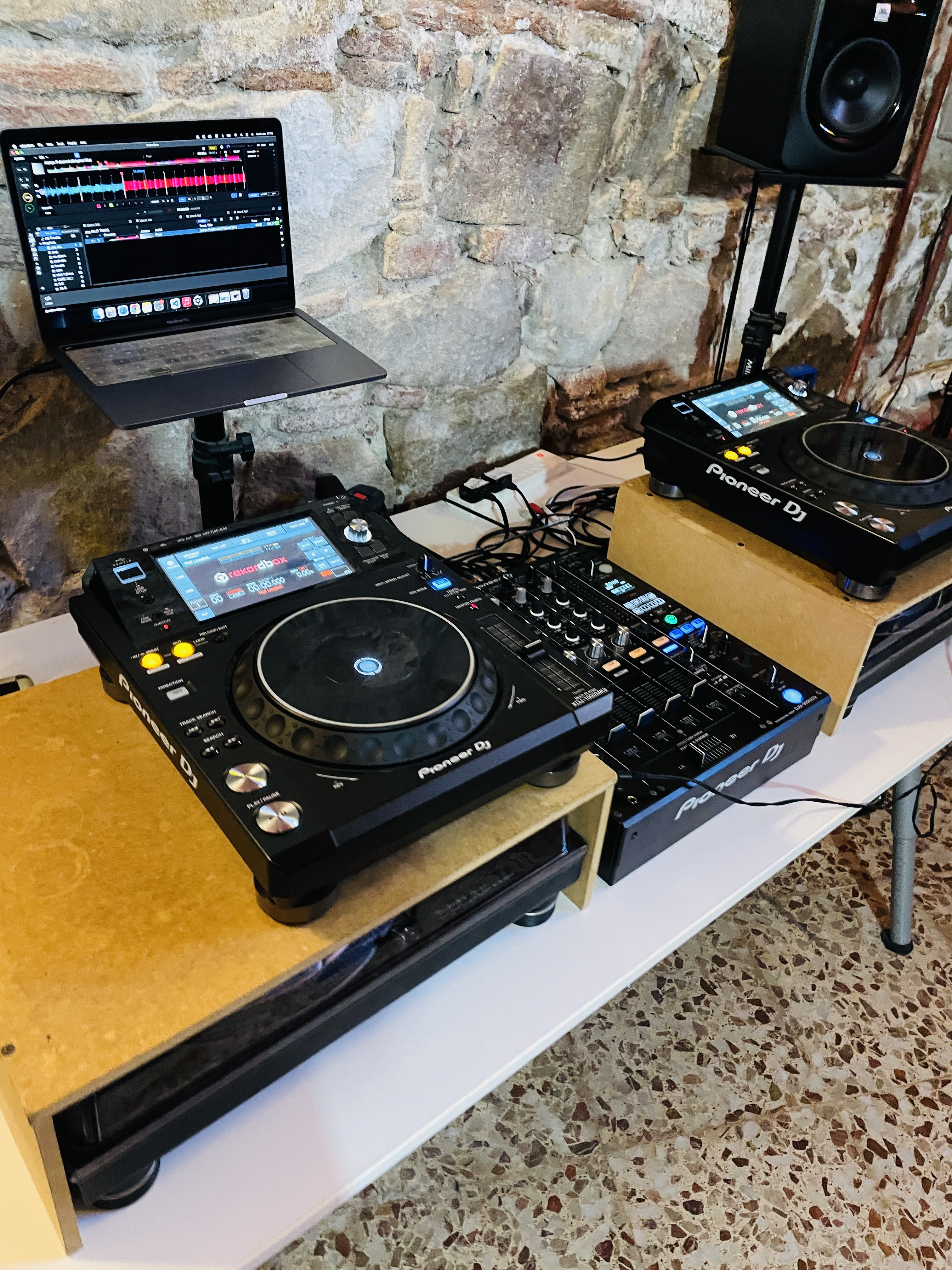
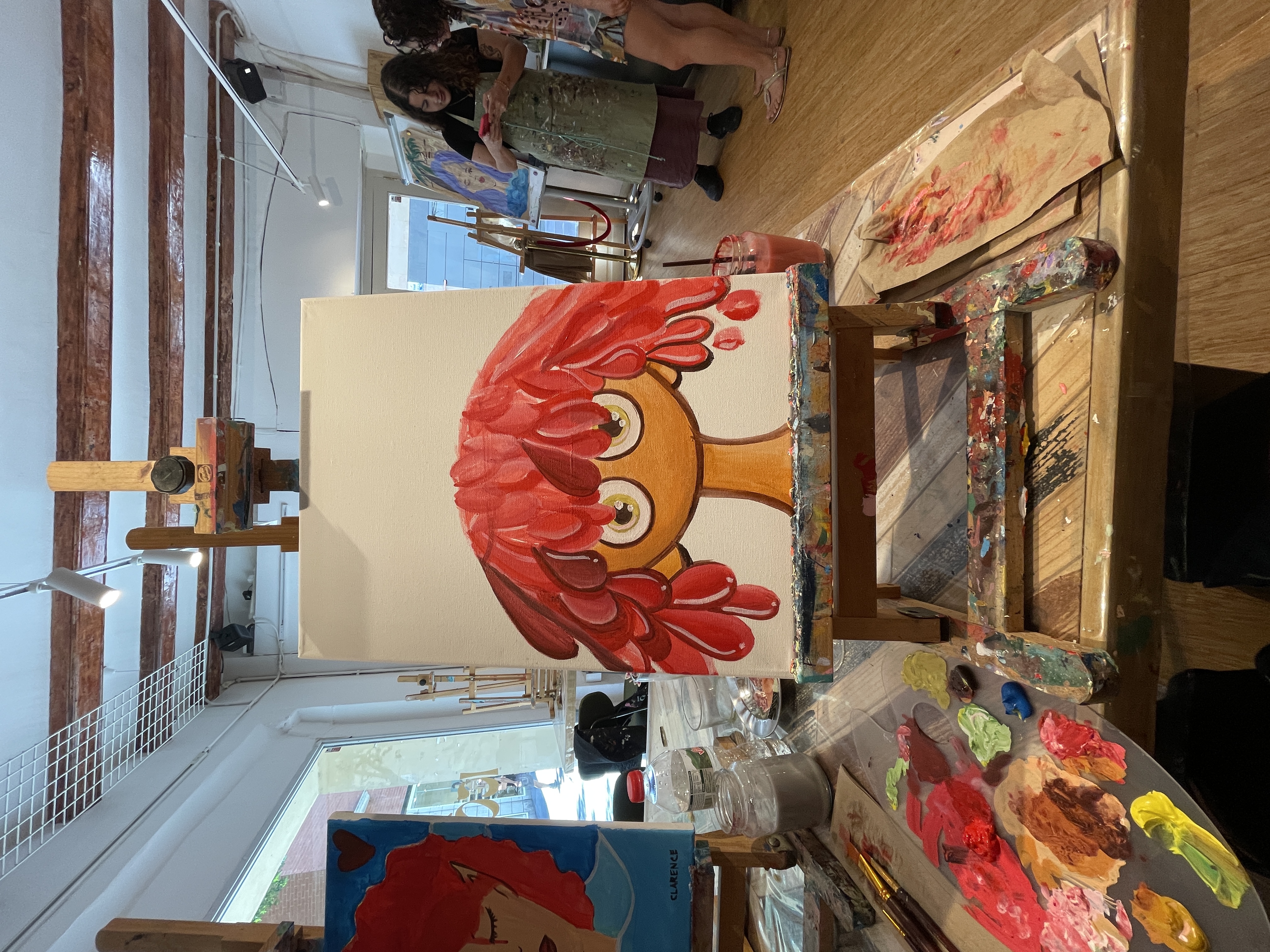
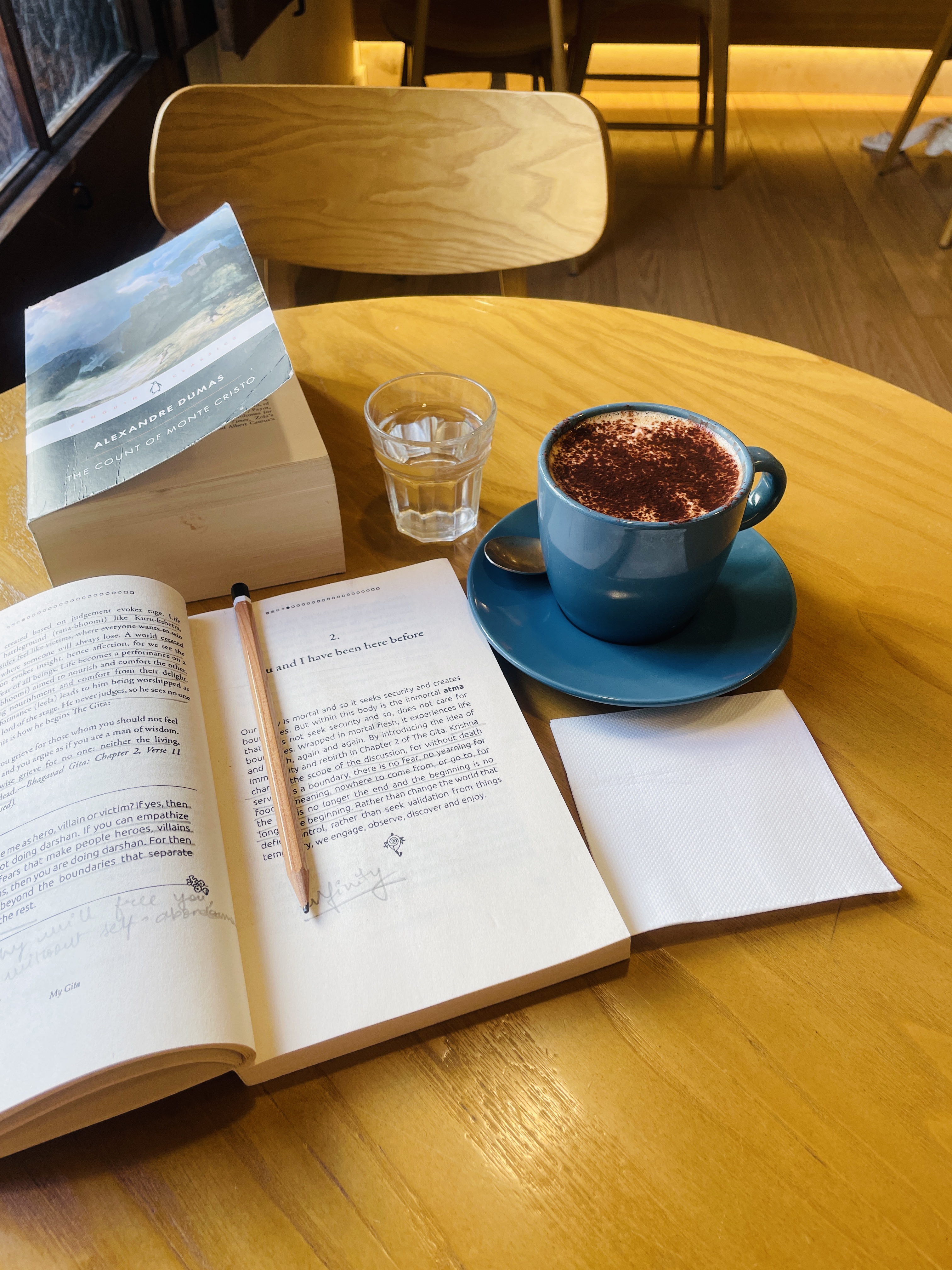
These cannot be measured using one generic "task completed" model.
A hobby is not a task. This sounds obvious. But most productivity interfaces don't behave as though it is. Consider: violin progress may be cleaner bowing. DJing progress may be better transitions. Reading progress may be understanding an idea.
🎻 Violin
What can I play now that I couldn't play before?
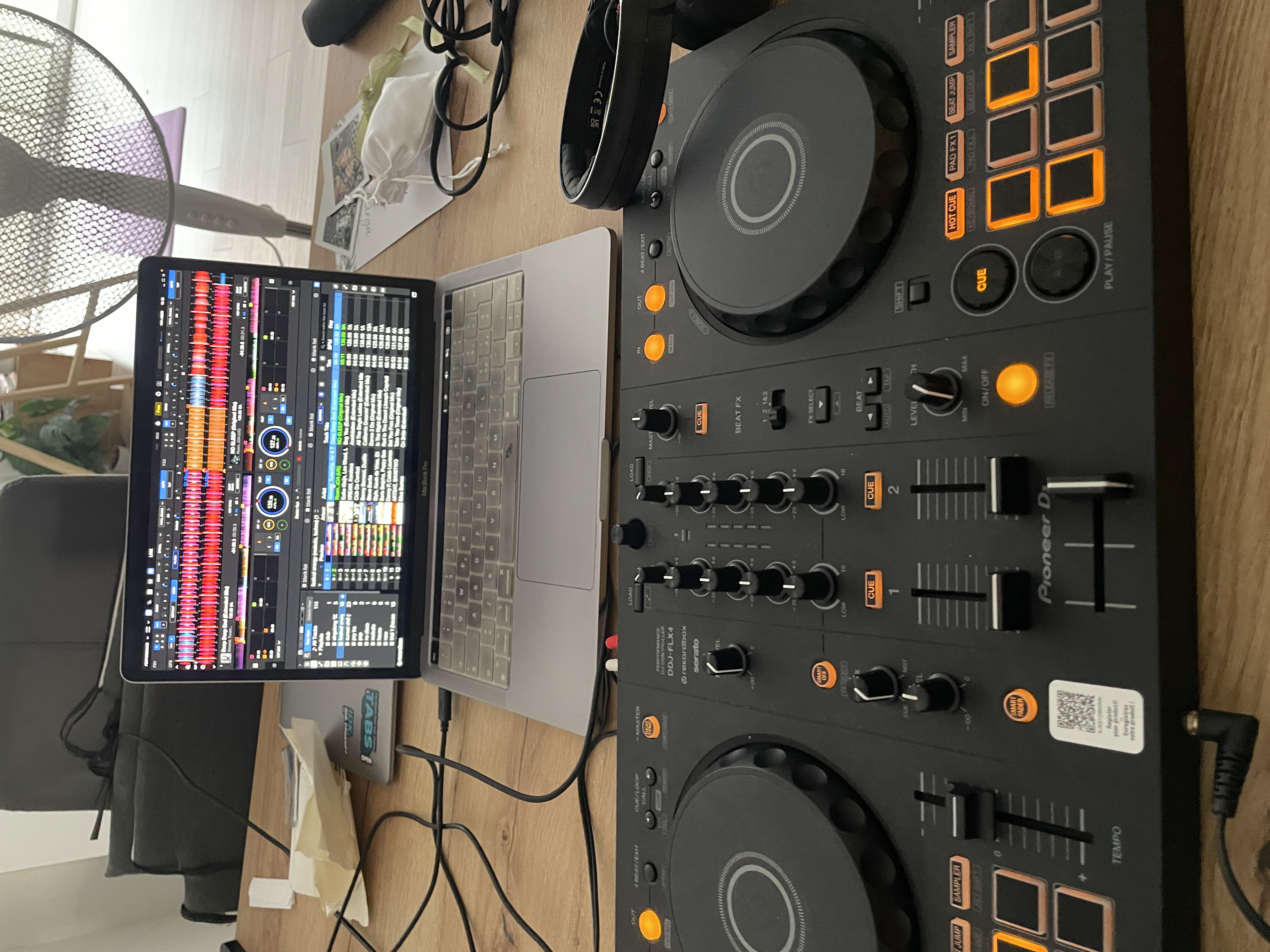
🎧 DJ
Are my transitions smoother?
📚 Reading
What do I understand now?
✏️ Illustration
What have I made?
🎨 Painting
What did I discover?
🗺️ Cartography
What did I notice?
The system needed multiple definitions of progress.
Progress is not a universal unit. A conventional tracker might ask "how much have you completed?" But the meaningful question changes by hobby. The system therefore needed multiple definitions of progress.
Key insight
Progress is not a universal unit. The meaningful question changes by activity.
A collection of signals, not a percentage.
I designed progress as a collection of signals rather than a percentage. Each hobby has its own natural progress signals: violin tracks repertoire and technique, reading tracks books and ideas, illustration tracks projects and experiments.
The biggest threat wasn't forgetting hobbies. It was losing the thread.
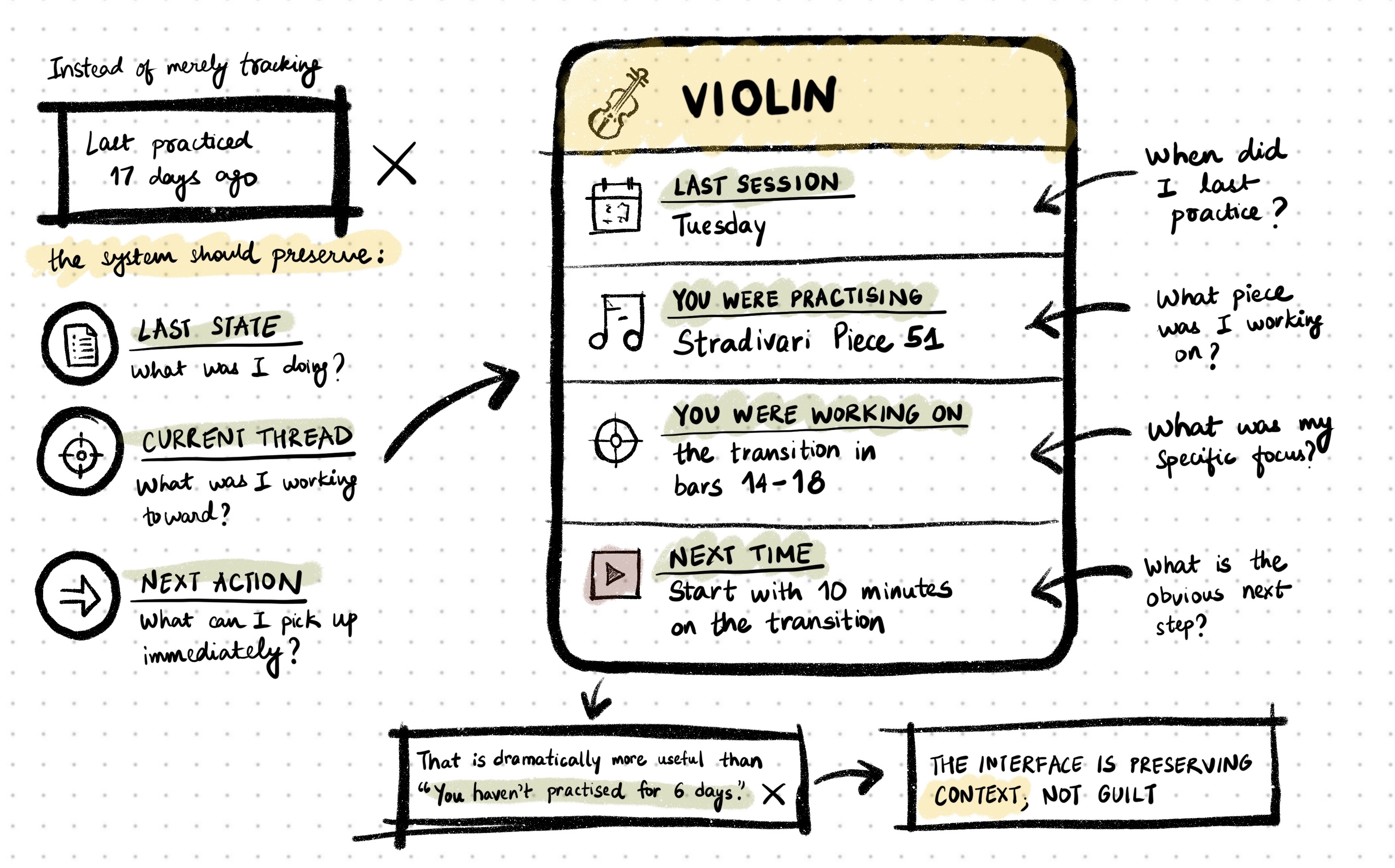
A hobby often doesn't disappear because interest disappears. It disappears because too much time passes between sessions. After a few weeks away from violin, the barrier isn't "I don't want to play." It's "where was I?" What was I practising? What was difficult? What should I do next?
Key insight
The interface should preserve context, not guilt.
Returning should feel like continuing, not restarting.
Instead of merely tracking "last practiced: 17 days ago," the system should preserve the last state, the current thread, and the next action. The interface is preserving context, not guilt.
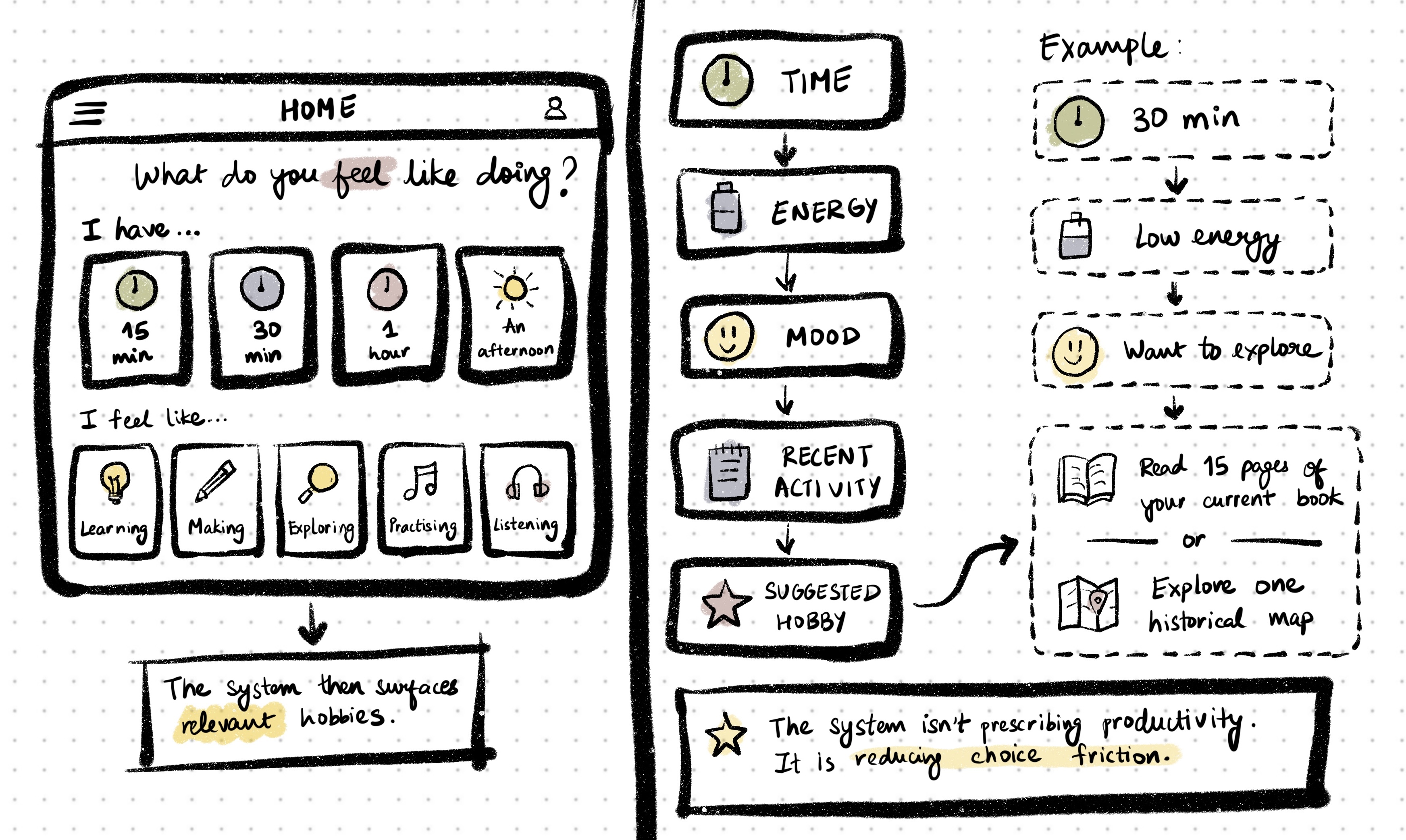
A hobby tracker should help me choose, not tell me what to do.
With six interests, the problem becomes: what do I feel like doing right now? A rigid schedule would solve the wrong problem. Instead, I explored a recommendation layer based on time, energy, mood and continuity.
Key insight
The system should reduce choice friction, not prescribe productivity.
Instead of six hobby icons, the home screen begins with a question.
Instead of opening the app to six hobby icons, the home screen begins with: "What do you feel like doing?" The user selects time available, then mood, and the system surfaces relevant hobbies.
A creative life is seasonal.
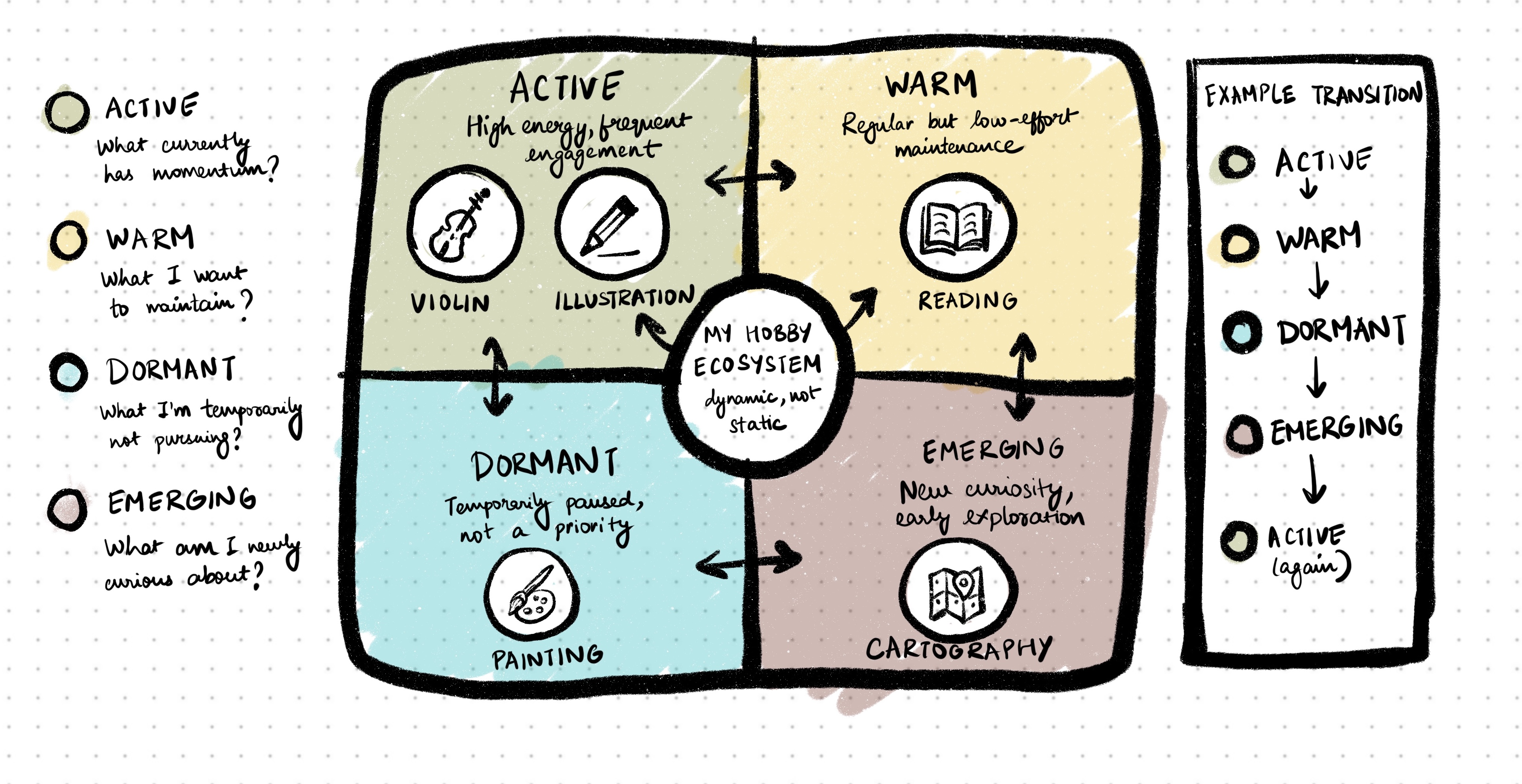
Not all balance means equal time. A naive hobby manager might attempt 20% per hobby. But that's artificial. Some interests naturally become intense for a month. Others become dormant. Then return. A creative life is seasonal.
Key insight
Not doing something is a legitimate state, not a failure.
Active, warm, dormant, emerging.
Instead of a rigid schedule, I designed the system around four states: active (what currently has momentum), warm (what I want to maintain), dormant (what I'm temporarily not pursuing) and emerging (what I'm newly curious about). This makes "not doing something" a legitimate state rather than a failure.
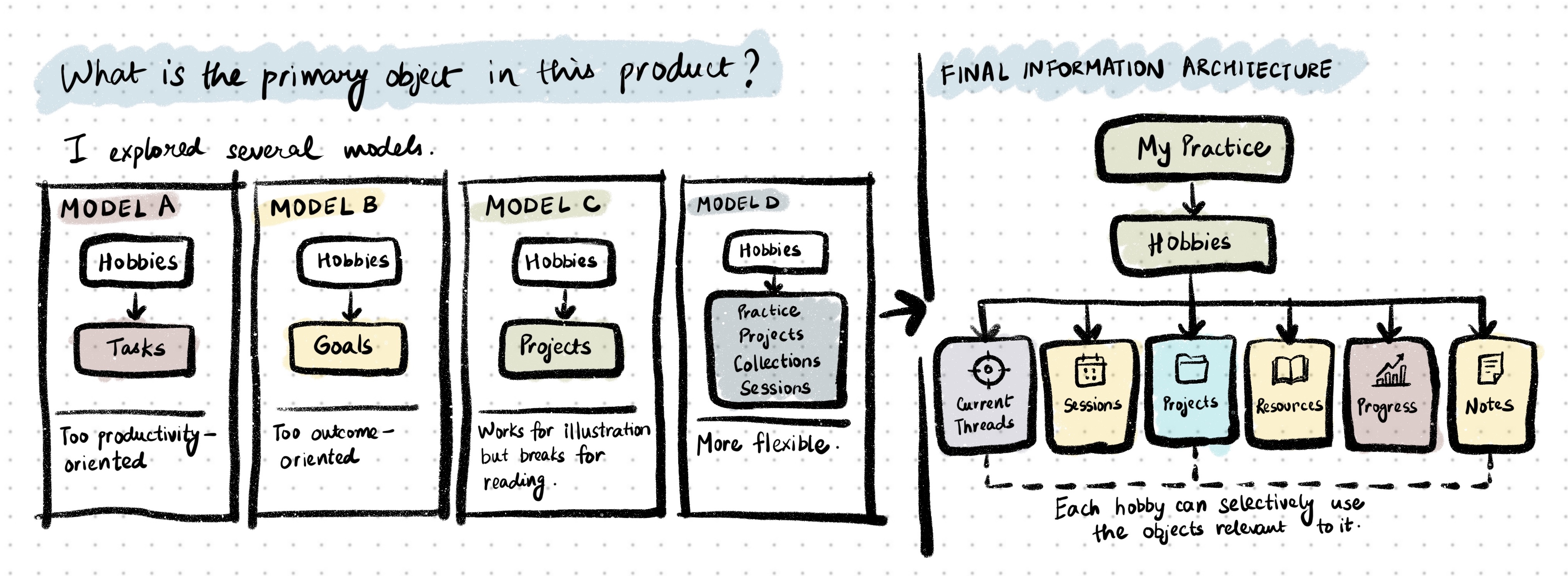
What is the primary object in this product?
The biggest structural question became: what is the primary object in this product? I explored several models before landing on a flexible architecture where each hobby selectively uses the objects relevant to it.
Hobbies → Tasks. Too productivity-oriented.
Hobbies → Goals. Too outcome-oriented.
Hobbies → Projects. Works for illustration but breaks for reading.
Hobbies → Practice / Projects / Collections / Sessions. More flexible. ✓
Not a dashboard full of numbers. A question.
The home screen deliberately avoids becoming a dashboard full of numbers. Instead, it answers three questions: what am I doing? Where did I leave off? What could I do next?
The home screen answers three questions
- →What am I doing?, current active interests
- →Where did I leave off?, recent context
- →What could I do next?, low-friction suggestions
The architecture stays consistent. The content model adapts.
Selecting a hobby shouldn't open a generic analytics dashboard. Each hobby gets a native representation. The architecture remains consistent. The content model adapts to the activity.
The hobbies weren't isolated. They fed each other.
The hobbies aren't isolated. Reading can inspire illustration. Cartography can inspire illustration. Violin can influence DJing. The system therefore shouldn't only organise hobbies. It should reveal relationships between interests.
Hobbies aren't isolated
- →Reading → inspires illustration subjects
- →Cartography → provides illustration material
- →Violin → influences DJing rhythm
- →Painting → influences visual experimentation
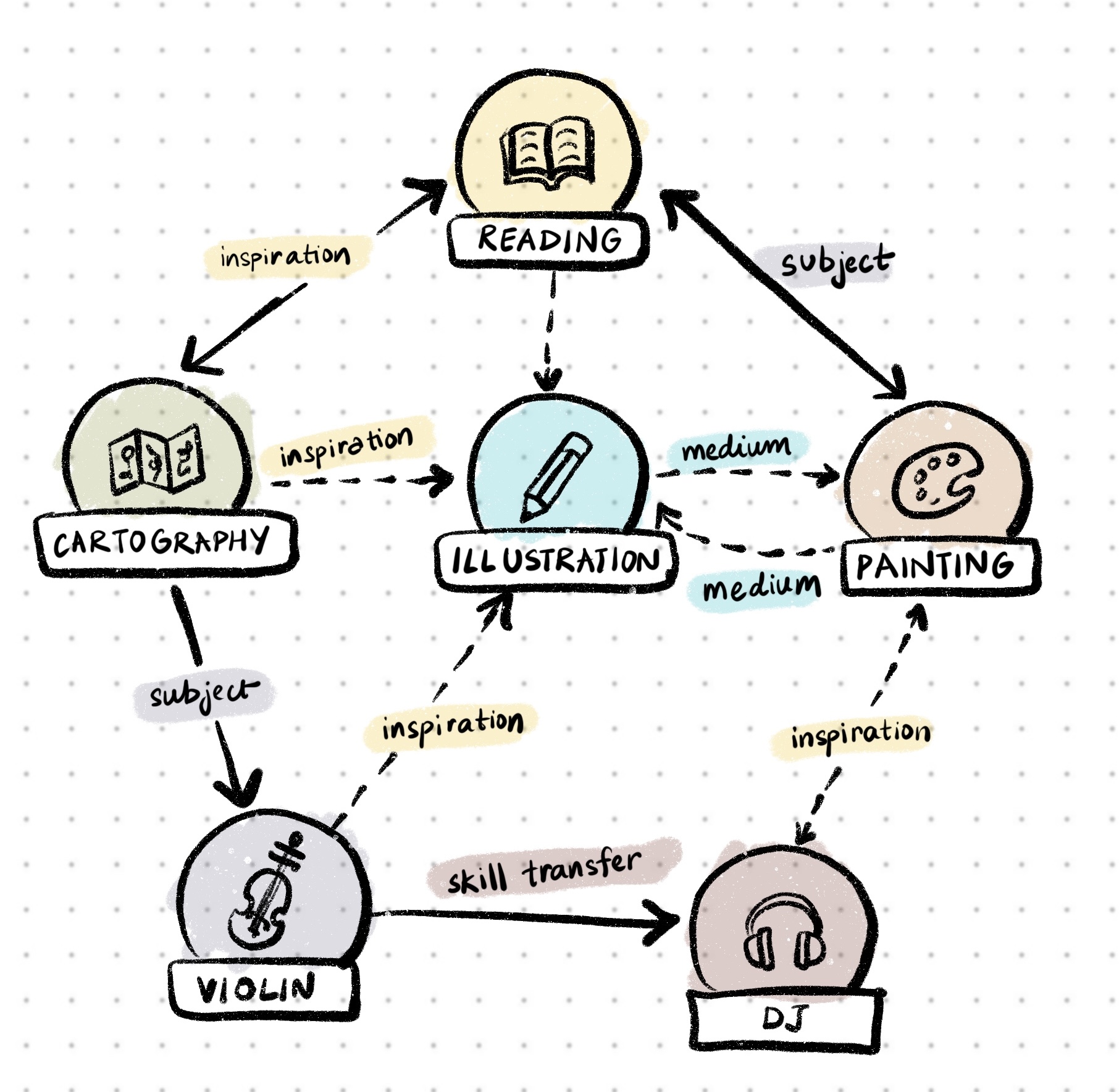
Six hobbies were one creative practice expressed through six mediums.
The six hobbies were not six separate hobbies. They were one creative practice expressed through six mediums. The system therefore had a second job: make connections visible that I couldn't see when activities were managed separately.
Key insight
Make connections visible that you couldn't see when activities were managed separately.
Reading
gave me ideas
Cartography
gave me subjects
Illustration
gave me visual language
Painting
gave me experimentation
Violin
gave me practice
DJing
gave me composition and rhythm
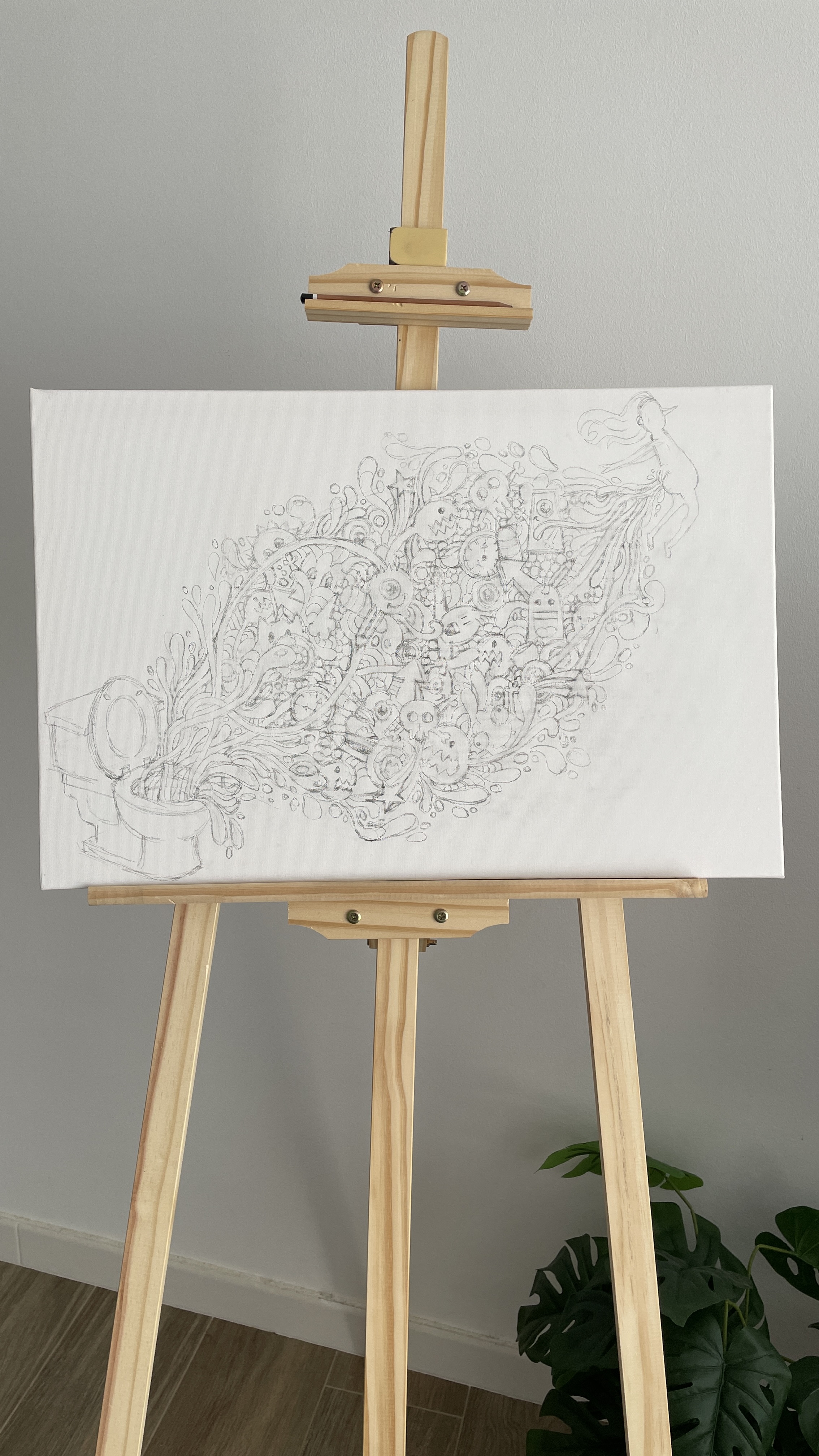
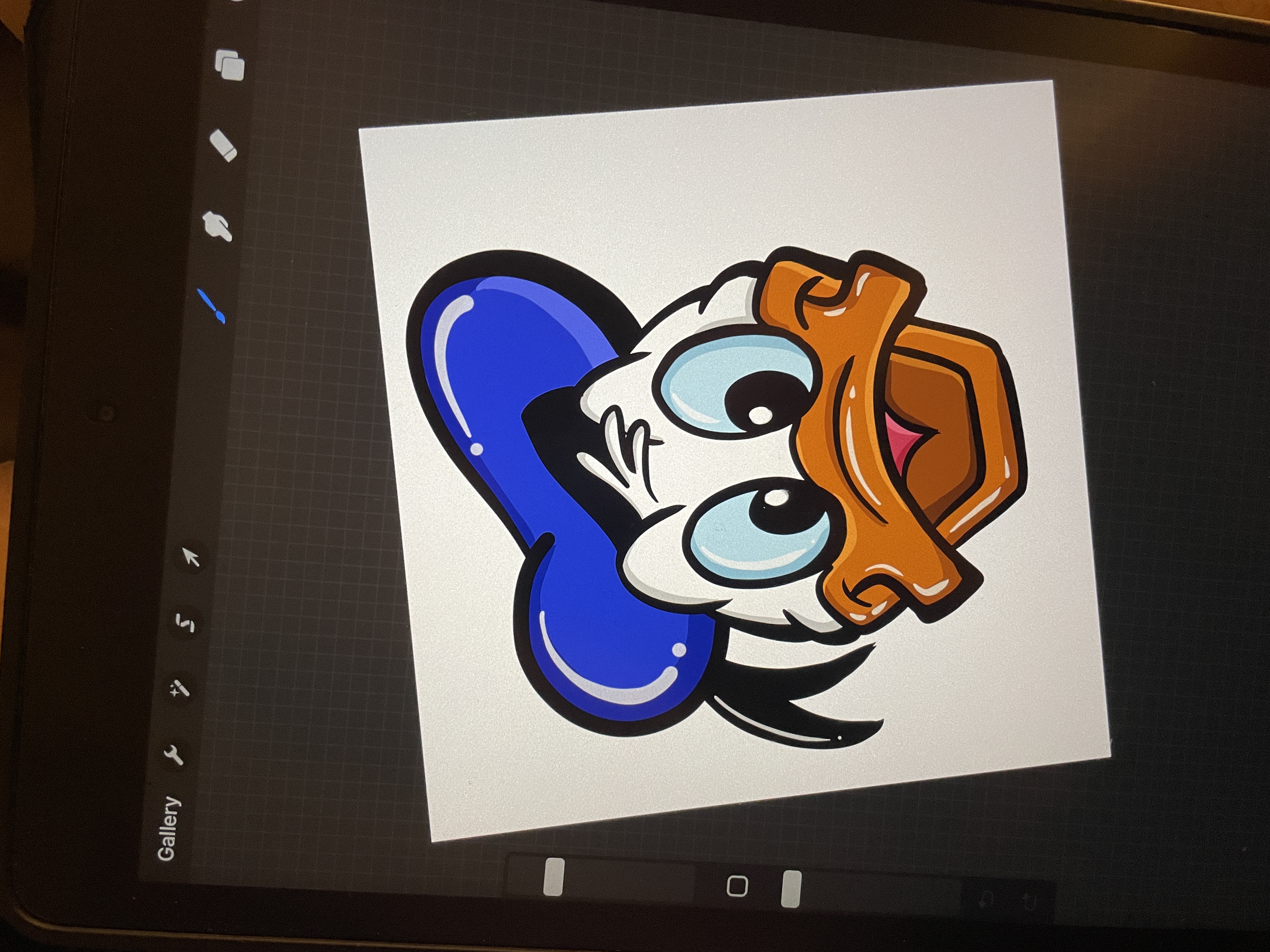
From the archive · one practice, six mediums
Six principles for non-linear practice.
Design for continuity, not completion.
Hobbies don't have finish lines.
Personalize the metric, not just the content.
Different activities need different definitions of progress.
Preserve context.
Returning should feel like continuing, not restarting.
Recommend based on readiness.
Time, energy and mood can be more useful than rigid schedules.
Make dormancy legitimate.
Pausing an interest isn't failure.
Surface connections.
The value of multiple interests may exist in the relationships between them.
Test around behaviour, not visual preference.
I would test the prototype around behaviour, not visual preference. The tasks measure time to decision, context recovery, progress model comprehension, permission to pause, and discovery.
- 01
"You have 20 minutes and low energy. Find something you could realistically do."
time to decision - 02
"Return to violin after two weeks away."
context recovery - 03
"Show me how you know you're progressing."
progress model comprehension - 04
"Move painting into a dormant state."
permission to pause - 05
"Find a connection between two of your hobbies."
discovery
The success metric is continuity of creative practice.
Not six hobbies completed. Not 47 consecutive days. Not 92% productivity. Instead: the user keeps coming back. They know what they're interested in, where they left off, what they could do next, and how their interests relate to one another.
Key insight
The success metric is continuity of creative practice.
Not success
- ✕Six hobbies completed
- ✕47 consecutive days
- ✕92% productivity
Instead: the user keeps coming back
- ✓The user keeps coming back
- ✓They know what they're interested in
- ✓They know where they left off
- ✓They know what they could do next
- ✓They know how their interests relate
From time management to attention management.
The prototype changed the framing of hobby management from "what should I fit into my schedule?" to "what deserves my attention right now?" That is a subtle but important shift. A hobby isn't necessarily something that needs to be optimised. Sometimes it simply needs to remain accessible enough to return to.
Key insight
Sometimes a system's job is simply to keep the door open.
Curiosity doesn't move in straight lines.
A good system keeps the door open.
This project began with a very ordinary frustration: I have too many things I want to learn. But the deeper problem wasn't time management. It was the inadequacy of productivity models for open-ended human curiosity.
Most digital systems are extremely good at representing tasks, goals, deadlines and completion. They're less comfortable with curiosity, experimentation, wandering, pausing, returning and becoming interested again. That changed the way I think about product design. A good system doesn't always push a person toward an outcome. Sometimes its job is simply to keep the door open.

